
This monthly report is prepared for Sinocism by the excellent Sinification, an invaluable resource for understanding how domestic and international affairs are debated within the Chinese establishment. — Bill
Note: The summaries included in this digest were drafted with AI assistance according to detailed editorial instructions: we selected the central and subsidiary points to highlight, determined their structure and emphasis, and then revised and reviewed each summary before publication. AI was not used to select the material or to generate summaries independently of editorial direction.
The celebratory mood that followed the Trump–Xi summit in May seems to have run its course. The prevailing assessment of US–China “strategic stability” remains broadly optimistic, but July’s commentary offers a more sober assessment of China’s strategic environment.
Authors still assume that US primacy is weakening and China’s material power is growing, but they repeatedly ask whether those advantages can be converted into durable influence. As Zhou Li, a former vice-minister of the International Department of the CPC Central Committee, writes in an otherwise confident survey, “having an advantage does not equate to a winning position”.
Zheng Yongnian and Da Wei complicate familiar narratives of American decline. Zheng describes a waning hegemon whose decline is relative, protracted and non-linear, warning, “China must not lull itself into a false sense of security”. Da distinguishes the end of Pax Americana from the unresolved trajectory of American national power, while Wu Xinbo provides the policy prescription: “constructive strategic stability” rests on credible Chinese counter-pressure.
Elsewhere, Wu says that Xi Jinping’s four global initiatives require real resources to implement. His tone is far from critical, but the observation that “global governance cannot rely solely on conceptual initiatives” is nonetheless striking. Jin Canrong similarly acknowledges that China’s historically East Asia-centred statecraft has left it short of experience in managing genuinely global affairs, while cultural insecurity means confidence lags behind material strength.
AI coverage in July included commentary on Xi Jinping’s announcement of the World Artificial Intelligence Cooperation Organisation (WAICO) and the unveiling of a new Chinese AI model that allegedly rivals US competitors, but much of this commentary was boilerplate. Instead we included two pieces that resist triumphalism about China’s recent advances. While Zhu Songchun identifies dependence on US-defined concepts and paradigms as China’s deeper weakness, Huang Ping distinguishes mass-market success from American frontier leadership.
Among the pieces focusing on Chinese society, Yao Yang uses Wang Hong’s Fields Medal to explore weak female representation in senior politics and a revival of patriarchal ideas. Zhou Lian and Xu Jilin, and separately Dong Yue, focus on young people’s retreat from public life. Zhou and Xu attribute this retreat to repeated experiences of powerlessness, while Dong identifies a sub-group of highly educated home-staying “squatting youth” [蹲族], produced by an expansion of educational opportunities, but a lack of good jobs.
June’s “Going Out” section largely made the case for a new wave of outward investment—July’s selection focuses on its conditions and risks. Li Wei warns that China’s commercial footprint could outstrip the state’s capacity to protect overseas assets, while Liang Dong, Wu Ting and Wu Huimin argue that outward investment serves “dual circulation” only when profits and productive capabilities return home.
On the home front, Liu Shijin treats China’s “strong supply, weak demand” as the result of a production-first growth model that has outlived the shortage economy for which it was built. A fuller account of China’s domestic economy will follow in our forthcoming Economy Digest.
On Europe and its relations with Beijing, the tone is pessimistic about the prospects for resolving structural conflict, but broadly confident about China’s relative position. The most arresting argument comes from former Chinese trade diplomat Zhou Xiaoming, who says China’s support for a “strong, united EU” no longer serves Beijing’s interests: Brussels was imagined as an autonomous pole in a multipolar order, but has instead become an institutional centre of confrontation with China.
Ding Chun and Wu Jiwei, and separately Qin Shuo, reach softer conclusions. Ding and Wu describe EU–China industrial relations as “competitive coexistence”. Qin, a prominent business-media commentator, writes that trade conflict is a normal consequence of China becoming the axis of global manufacturing. His conclusion—that China bears responsibility for steering the contest towards a more open and balanced order—is refreshing.
Coverage of Britain’s new prime minister was voluminous but held few surprises: Long Jing expects broad foreign-policy continuity, constrained by existing security alignments and Britain’s diminished room for manoeuvre.
On the Middle East, Liu Zhongmin and Tang Zhichao see the Iran war accelerating the transition towards a “post-American” regional order—both predict deeper fragmentation and disorder alongside greater regional agency.
July also saw many pieces marking the tenth anniversary of the 2016 South China Sea arbitration award. Most were boilerplate, but Wu Shicun’s interview with the South China Morning Post stands out for warning that fixed Chinese facilities on Scarborough Shoal remain an option if Philippine and foreign patrols intensify. Wu’s threat fits a longer pattern, but remains notable. Bao Yinan offers a less confrontational route, proposing consent-based mediation through the new Hong Kong-based International Organisation for Mediation.
Neighbourhood diplomacy is another major theme of the month. Both Zhou Fangyin and Zhao Long describe an increasingly securitised environment in which US alliance policy raises pressure to choose sides. On China’s regional engagement, Zhang Yun reads Japan–Philippines maritime talks as part of Tokyo’s attempt to become a second centre of regional leadership, Mao Keji and Mao Yaxin interpret India’s reopening to Chinese investment as industrial necessity rather than strategic trust and Wang Youming expects Latin America’s rightward turn to complicate China’s position without dislodging it.
July’s strongest writing qualifies confidence in China’s rise—American retrenchment is adaptive rather than terminal, the trade war is survivable but unavoidable and China’s growing power is running ahead of the institutional, diplomatic and intellectual capacities needed to translate it into durable gain.
— Jacob Mardell

In Brief
US–China & Global Order:
Zheng Yongnian on America as a “declining hegemon” whose relative decline coexists with renewed technological and coercive power.
Da Wei on Pax Americana ending without settling whether American national power declines or revives.
Wu Xinbo on:
“constructive strategic stability” resting on credible Chinese counter-pressure.
China’s four global initiatives requiring “real money”, institutions and trained personnel to become operational.
Jin Canrong on China’s global experience and cultural confidence lagging behind its material strength.
Zhou Li on accelerating US hegemonic decline and China’s systemic “ideas + strength + strategy” advantage.
Europe:
Zhou Xiaoming on why China’s long-standing support for a “strong, united EU” may no longer serve its interests.
Qin Shuo on trade war as a structural consequence of China becoming the axis of global manufacturing.
Ding Chun & Wu Jiwei on China–EU industrial relations entering “competitive coexistence”, with selective cooperation surviving behind higher barriers.
Sun Chenghao on NATO 3.0 becoming more militarily effective.
Long Jing on Andy Burnham’s foreign policy being untested but constrained by circumstances.
Chinese Economy & Going Out:
Liu Shijin on “strong supply, weak demand” as the result of China’s production-first growth model.
Li Wei on China’s commercial expansion outrunning its capacity to protect overseas interests.
Liang Dong, Wu Ting & Wu Huimin on outward investment serving “dual circulation” only when profits return home.
Yang Ping on Chinese capital potentially undermining industrialisation in the Global South.
Middle East:
Liu Zhongmin on the interruption, but not reversal, of the Middle East’s movement towards strategic autonomy, reconciliation and development.
Tang Zhichao on the acceleration of a fragmented “post-American” order.
South China Sea:
Wu Shicun on fixed facilities at Scarborough Shoal remaining an option.
Bao Yinan on using consent-based mediation to manage practical disputes in the South China Sea.
Neighbourhood Diplomacy:
Zhou Fangyin on “de-securitisation” and “de-geopoliticisation” as principles for keeping China’s neighbourhood from splitting into rival camps.
Zhao Long on “doubt and fear of America” keeping states vacillating between strategic autonomy and tighter alliance dependence.
Shi Yuanhua on a 64-state “greater periphery” including the United States and the case for China biding its time on Taiwan.
Regional Policy:
Zhang Yun on Japan using the Philippines to become a second centre of power alongside Washington.
Mao Keji & Mao Yaxin on India’s attempt to reduce reliance on China making it more dependent on Chinese goods.
Wang Youming on Latin America’s rightward turn complicating, but not dislodging China’s position.
AI & Tech:
Zhu Songchun on China remaining dependent on US concepts.
Huang Ping on China’s “good enough and cheap” AI advantage facing a Huawei-style political blockade.
Society:
Yao Yang on Wang Hong’s Fields Medal, patriarchal revival and Chinese women’ s shrinking horizons.
Zhou Lian & Xu Jilin on young people’s retreat from public life and “dog-wisdom-ism” among knowledge elites.
Dong Yue on graduate “squatting youth” [蹲族], produced by the mismatch between higher-education expansion and the lack of suitable employment.
1. US-China & Global Order
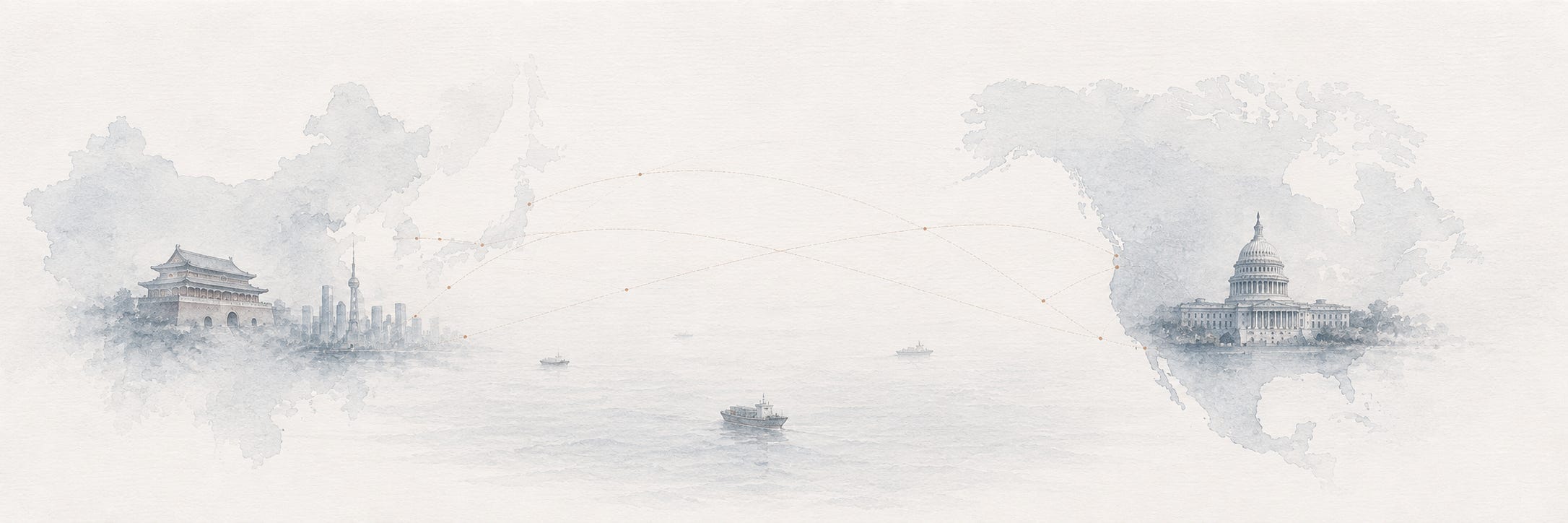
Zheng Yongnian (郑永年): The whole world may misunderstand the United States, but China cannot afford to do so. America’s decline is relative, not absolute and the decline of a major power is a long-term process. Multipolarisation is a long process and the US will remain the most important pole. Meanwhile, the nature of American hegemony is changing, from “constructive” to “destructive”. In important fields such as AI, American hegemony has not only failed to decline but is being strengthened and upgraded. The US practises protectionism in areas of goods trade where it lacks comparative advantage, but in fields where it possesses comparative advantage, it continues to advance globalisation, thus increasing the dependence of other countries. The American claim that “China is only a few days behind the United States”, satisfies the vanity of people in China while mobilising resources within the United States.— X.Q. Deng Presidential Chair Professor and Dean, School of Public Policy, CUHK-Shenzhen (大湾区评论, 4 July).
Da Wei (达巍): “Pax Americana” is coming to an end, but no conclusion can yet be reached about America’s rise or decline. America is actively dismantling the hegemonic system that it took the lead in constructing after the Second World War. MAGA is not a retreat from empire back to republic. It is a retreat from a liberal internationalist empire to the late-nineteenth-century imagination of a nationalist empire. America has not simply decided that it “does not want to be a hegemon” any longer. More accurately, America is unwilling to continue bearing the costs. Historically, leaps in American national power generally came from the opening of three kinds of frontier: geographical, institutional and technological frontiers—only this latter frontier remains available to the US. America’s national power may increase again, but “Pax Americana” is unlikely to return. — Director and Professor, Centre for International Security and Strategy (CISS), Tsinghua University (清华大学战略与安全研究中心, 1 July).
Wu Xinbo (吴心伯): Constructive strategic stability depends on credible Chinese counter-pressure, and every strike answered with equal or greater force. Repeated rounds of “fighting and talking” have changed expectations. Washington must now price in retaliation before acting. Planned trade and investment councils, fentanyl cooperation, maritime military consultations and the suspension of Taiwan arms sales indicate what stabilisation is able to deliver. However, Trump sees Taiwan as leverage for obtaining concessions from China, so Beijing should make sure to maintain pressure, repeatedly restate its red lines and respond forcefully to US provocation. Stability also remains exposed to US domestic politics—a Democratic House could use hearings, human rights, arms sales and investment restrictions to constrain Trump. Taiwan’s January 2028 leadership election and the November US presidential contest may bring significant changes. — Dean, Institute of International Studies, and Director, Centre for American Studies, Fudan University (思路打开, 6 July).
Wu Xinbo (吴心伯): America’s waning global leadership creates a historic opening for China, but Beijing’s four global initiatives still need to be translated into concrete outcomes. US leadership originally combined material power with progressive principles, but Cold War militarisation and intervention eroded its public character. Meanwhile, today’s reliance on sanctions signals declining diplomatic persuasion and credibility. Newer arrangements such as the Indo-Pacific strategy lack the appeal of post-war institution-building. Global governance cannot rely solely on conceptual initiatives, and if the UN headquarters one day moves from the Hudson to the Huangpu, China must prepare the necessary resources, physical space and professional talent in advance. — Dean, Institute of International Studies, and Director, Centre for American Studies, Fudan University (人大重阳, 3 July).
Jin Canrong (金灿荣): China may yet overturn Brzezinski’s prediction that America will be the last global superpower, but converting its underestimated strength into a genuinely global role requires experience and institutions that its historically East Asia-centred statecraft never developed. Unlike Western powers that were formed by centuries of colonial expansion, Chinese dynasties governed a vast, diverse society, but remained strategically defensive. China’s instinctive rejection of “G2” reflects resistance to being “praised to death”, but also a lack of preparation for global affairs. A separate legacy of Qing rule results in cultural self-denigration—China has grown to 1.95 metres but still thinks itself 1.2 metres tall. Development will reverse this insecurity, while US containment acts as a “good teacher”, training China for the world stage. China should ultimately practise an enduring “kingly way” [王道] of restraint, rather than the West’s “hegemonic way” [霸道]. — Wu Yuzhang Chair Professor, School of International Studies, and Director, Centre for China’s Foreign Strategy Studies, Renmin University of China (金金乐道编辑部, 9 July).
Zhou Li (周力): The American hegemonic system is accelerating its own decline and multipolarisation is deepening, while China possesses a systemic “ideas + strength + strategy” advantage in the emerging order. The US–Israel–Iran conflict demonstrated that military superiority, sanctions and unilateral pressure cannot secure political outcomes. Pakistan- and Qatar-led mediation and the reopening of Hormuz point towards greater regional agency and an American return to offshore balancing. Meanwhile, Western political dysfunction and central-bank gold repatriation signal declining trust in established institutions and the dollar-centred system, though this is “de-risking” rather than imminent de-dollarisation. China’s governance model offers an alternative to Western institutional crisis, but “having an advantage does not equate to a winning position”. European protectionism and a more extreme America remain major risks. Beijing must secure 15th Five-Year Plan technological breakthroughs, repair supply-chain weaknesses and maintain strategic composure. — Former Vice-Minister, International Department of the CPC Central Committee (习近平外交思想和新时代中国外交, 6 July).
2. Europe
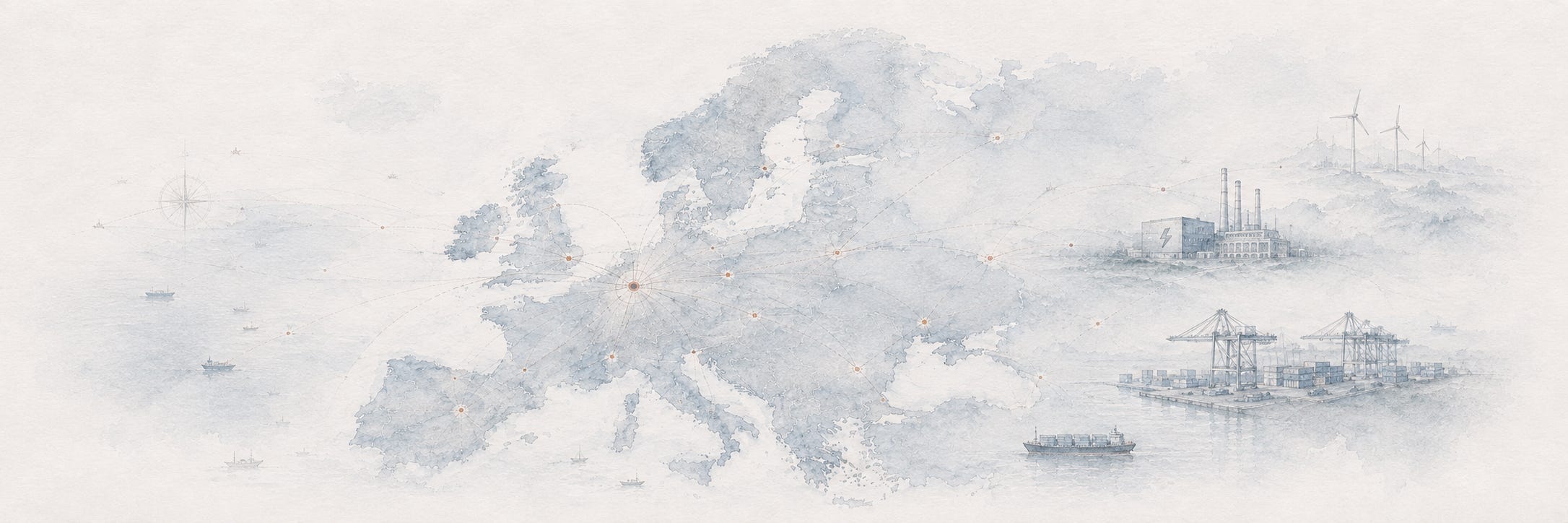
Zhou Xiaoming (周小明): China should reconsider its long-standing support for a “strong, united EU”. European integration once suggested an autonomous pole capable of preventing a US–China bipolar order and a third world war, but Brussels has instead become an institutional vehicle for confrontation with China. Recent consultations pulled both sides back from the brink—China still values the European market and strategic autonomy and Brussels doubts it can withstand Chinese retaliation. However, the two sides cannot resolve the structural conflict rooted in Europe’s declining competitiveness and export controls on the advanced goods China actually wants to buy. The “systemic rival” label now overrides partnership, recasting interdependence as risk, keeping the investment agreement frozen and treating engagement with member states as “divide and rule”. Beijing should “discard illusions” [丢掉幻想], prepare for wider restrictions under the EU’s Industrial Accelerator Act and shift more effort to national and local governments, but retain cooperation with EU institutions where possible. — Senior Fellow, Centre for China and Globalisation (CCG); former Deputy Permanent Representative, Permanent Mission of China to the United Nations Office at Geneva (观察者网, 8 July).
Qin Shuo (秦朔): Trade war is a normal condition of China becoming the central axis of the global manufacturing industrial chain—just as China is the anchor of world goods, America is the anchor of world currency. However, compared with when the United States led globalisation, China will have more opponents because China’s industries inevitably face many more competitors. China should not “protect commerce with swords”, or create a “Chinese circle”. Rather it has a responsibility to guide trade war towards a new order. Chinese companies can do more to accelerate localised production, establish more complete compliance systems, respond better to carbon and ESG challenges, and accelerate market and supply-chain diversification. China also has a major card to play, that is, making its own market bigger.— Co-Director, China Business Civilization Research Centre; former editor-in-chief, Nanfeng Chuang and China Business News (秦朔朋友圈, 12 July).
Ding Chun (丁纯) and Wu Jiwei (吴佶蔚): China–EU industrial relations have entered “competitive coexistence” [竞争性共存]. China’s rise from workshop to same-market rival has moved competition from products and prices into investment conditions, technology standards and rules. However, deep interdependence persists and the most likely trajectory is selective cooperation behind higher barriers. Europe still possesses strong basic research capabilities, but it suffers from structural weaknesses in translating scientific and technological achievements into commercial productivity and risks falling into the “medium-technology trap.” The Sino-European contest in emerging industries like artificial intelligence is essentially a clash between “governance-driven” and “application-driven” paths. This competition will not be limited to a single product or technology contest, but will extend to multiple dimensions, including breakthroughs in underlying technologies, supply chain support and the formulation of industry rules. — Ding: Director, Centre for European Studies, Fudan University; Wu: Postdoctoral Fellow, Institute of Belt and Road & Global Governance, Fudan University (欧洲问题研究, 5 July ).
Sun Chenghao (孙成昊): “NATO 3.0” may become more militarily effective without becoming more politically united. China should not expect transatlantic differences to lead to the disintegration of NATO—instead it should expect NATO’s military industrial expansion to lead to more securitised European scrutiny of Chinese technology and supply chains. NATO is shifting towards the delivery of industrial capacity and sustained combat power and Washington seeks to transfer responsibility transfer, without relinquishing US leadership. Trump wants Europe to gradually transform from a “security consumer” to a “security provider,” allowing the US to allocate more strategic resources to the Indo-Pacific. NATO is beset by three contradictions: between the pursuit for strategic autonomy and dependence on the US; between European priorities; and between NATO members who diverge on shared values. NATO will neither disintegrate rapidly nor revert to its past. — Associate Fellow, Centre for International Security and Strategy, Tsinghua University (中美聚焦, 17 July).
Long Jing (龙静): Britain’s seventh prime minister since the Brexit referendum was open to cooperation with China at the local level, but will face a more complicated position as prime minister. Burnham inherits economic decline, social division and international uncertainty, as well as the risks associated with chronic leadership churn. This means that his priority is likely to be domestic repair rather than diplomatic reinvention. Lacking foreign-policy experience, Burnham will likely preserve Starmer’s interest-driven policy, stabilising ties with Washington, sustaining support for Ukraine, rebuilding practical European ties and widening relations with middle powers. — Deputy Director, Centre for European Studies, Shanghai Institutes for International Studies (SIIS) (中美聚焦, 24 July).
3. Chinese Economy & Going Out
Liu Shijin (刘世锦): Strong supply and weak demand are not the result of short-term fluctuations, but originate in an unbalanced pattern of growth supported by institutional and structural factors. At the beginning of reform and opening, China was a shortage economy and this growth model—characterised by high savings, high investment and high exports—was appropriate and possessed clear advantages. But when investment can no longer be expanded and begins to contract, as is the case in China, it becomes increasingly difficult to sustain. Excessive productive investment now suppresses returns, while strong exports are a reason for rather than a consequence of weak domestic consumption. Meanwhile, companies distribute too little income and household deposits are concentrated among the affluent. Only by reducing the savings rate and increasing terminal demand can capacity utilisation be raised. China should reduce its total savings rates, reform its tax system, encourage private enterprises to increase dividends, funnel RMB20 trillion of listed state capital into social-security funds, use 50 per cent of macroeconomic to address the problem, raise pensions to release consumption and use housing support to address the mismatch facing migrant workers. — Former Vice-Chair, Committee for Economic Affairs of the 13th CPPCC National Committee; former Vice-President, Development Research Centre of the State Council (中国宏观经济论坛, 7 July).
Li Wei (李巍): China risks falling into a seventeenth-century “Dutch trap” [荷兰陷阱] if its expanding commercial footprint outstrips its capacity to protect overseas assets, personnel and international routes. China should therefore focus on building a robust system to safeguard its overseas interests. Great-power competition is shifting from seizing wealth towards creating it through technology, commercial application and industrial ecosystems, putting “super-enterprises” on the front lines of geopolitical competition. Chinese companies need to achieve a genuine breakthrough in profitability, rather than simply in sales volume, to achieve sustainable progress. Although globalisation faces severe challenges, it is not coming to an end. Several questions remain: whether China can maintain its status as the “world’s factory” and further climb up the global value chain; whether the US can reindustrialise; and whether emerging manufacturing bases can replicate the industrialisation experience of the “Four Asian Tigers” — Wu Yuzhang Distinguished Professor and Deputy Dean, School of International Studies, Renmin University of China (财经, 2 July).
Liang Dong (梁栋), Wu Ting (吴婷) and Wu Huimin (吴慧敏): “Going global” is not the end goal. Outward investment matters only insofar as it feeds profits and productive capabilities back into China’s domestic economy, advances “dual circulation” and avoids industrial hollowing-out. China has yet to convert its vast domestic industrial advantages into a commensurate capacity to own and earn income from overseas assets. Notably, it still runs an investment-income deficit. Japan offers lessons—including its retention of domestic “mother factories”—but it’s not a model China can simply reproduce. Geopolitical fragmentation, investment restrictions and localisation requirements are replacing the sequential “flying geese” model with a sovereign-bounded “hive model” [蜂巢模式] of multi-centred local production, firms and suppliers moving abroad together. Ultimately, repatriated profits, personnel circulation and overseas R&D should return technology, standards and management capabilities to China. — CICC analysts; Wu Huimin is Executive Dean, CICC Global Institute, and Executive Head, CICC Research Department (中金研究院, 9 July).
Yang Ping (杨平): China’s current phase of exporting capital and productive capacity may damage the Global South’s national industries, triggering protectionism and resource nationalism. If Chinese expansion destroys Southern countries’ own industrialisation, China’s Global South strategy will have “turned entirely into its opposite”, creating new dependency rather than enabling development. Beijing must not conflate its commercial and strategic relationships with the Global South, and should instead coordinate China’s industrial development with Southern countries’ autonomous industrialisation. The “community with a shared future for mankind” requires a political economy that goes beyond generic claims of “win-win” cooperation. — Founder, President and Editor-in-Chief, Beijing Cultural Review (文化纵横, 16 July).
4. Middle East

Liu Zhongmin (刘中民): Renewed war has divided the Middle East into three loose power formations, but has not reversed the deeper shift towards regional strategic autonomy, reconciliation and development. The US- and Israeli-led Abraham Accords grouping now coexists with a Saudi–Pakistan–Turkey–Egypt “Sunni Diamond”, as well as Iran’s weakened but resilient “resistance front”. The new Sunni grouping is not trying to choose a camp or overturn the existing order, but to “find direction” and avoid marginalisation, while Saudi Arabia continues to uphold the two-state solution. This fragmentation has severely impacted, but not yet reversed the previous trend of easing tensions and pursuit of common development and it is increasingly difficult to shake the growing sense of strategic autonomy within the region. While US allies have been unable to completely break free from their security dependence on the US in the short term, they have significantly accelerated their diversification in security and diplomacy. — Professor, Middle East Studies Institute, Shanghai International Studies University (环球时报, 13 July).
Tang Zhichao (唐志超): The US–Israel–Iran conflict has accelerated the Middle East’s transition towards a “post-American era”. This will likely lead towards a more fragmented and disorderly, but more autonomous regional order. Washington’s Gulf security architecture has become a liability that attracts Iranian retaliation, while US forces have failed to protect partners or control Hormuz, shattering the myth of the invincible US security shield. The strategic development trend in the Gulf region has also been reversed, with countries falling into a new development–security dilemma. Regional fronts such as the “Four-Nation Group” of Saudi Arabia, Turkey, Pakistan and Egypt are coalescing and the fragmentation of the Middle East is further intensifying. The US strategy of using Iran as a breakthrough to contain China and Russia in the Middle East has been thwarted, with strategic cooperation between China and Middle Eastern countries deepening.— Professor and Deputy Director-General, Institute of West Asian and African Studies, CASS (当代世界, Issue 6, 2026).
5. South China Sea
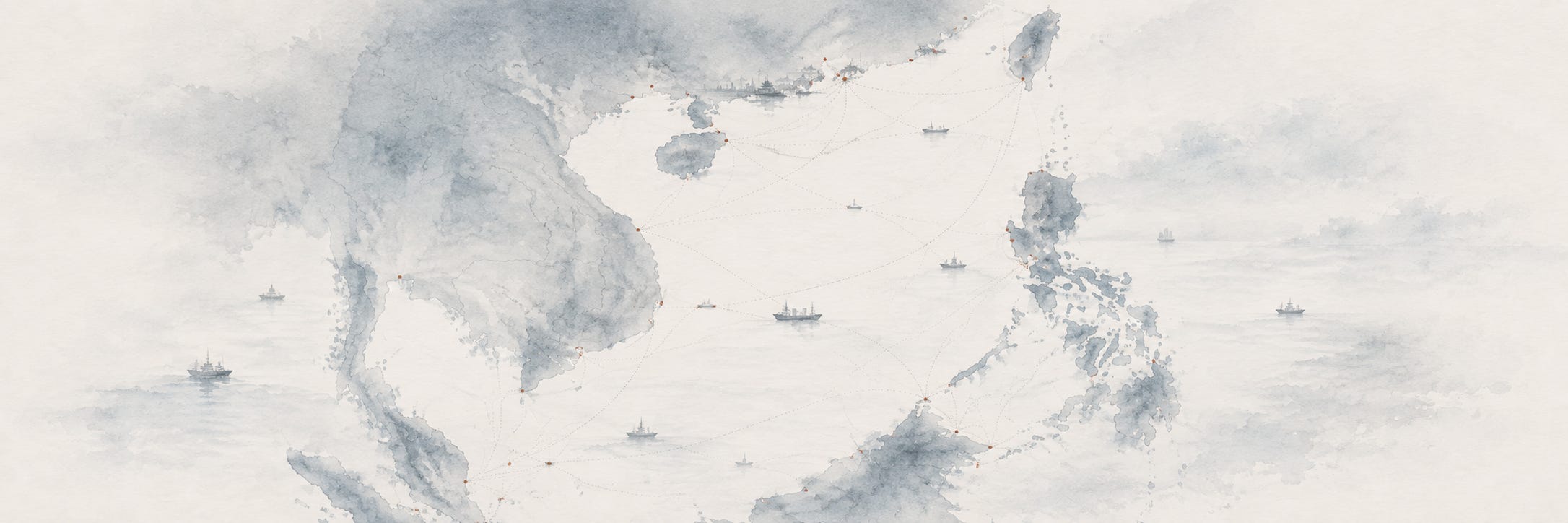
Wu Shicun (吴士存): China will not proactively undertake further South China Sea reclamation, but fixed facilities on Scarborough Shoal remain an option. If Beijing builds, it will be because “external forces have left us with no choice”. Any Philippine vessel deliberately grounded at Sandy Cay will be towed away, although China itself does not intend to occupy the feature. Opening Taiwan-held Taiping Island to US or Japanese forces would cross a mainland red line if this developed into activity targeting the mainland or infringing Chinese sovereign rights. Beijing will likewise reject maritime delimitations reached without China that violate its sovereign rights. Practical cooperation should begin bilaterally with fish-stock surveys, catch quotas, coordinated licensing and pollution control. — Founding President and Chairman of the Academic Committee, National Institute for South China Sea Studies (South China Morning Post, 13 July).
Bao Yinan (包毅楠): The Hong Kong-based International Organisation for Mediation (IOMed) could provide China with a third-party mechanism for addressing selected South China Sea disputes without sacrificing the consent and procedural control that is lacking in compulsory arbitration. Proceedings at the IOMed require the agreement of all parties, allow any party to withdraw unilaterally and make only settlements that are formally concluded by the parties legally binding. China helped establish the organisation, was its first signatory, and five of eleven ASEAN countries have already joined. WTO disputes are excluded from its jurisdiction, but not sovereignty or maritime-delimitation disputes. UNCLOS allows parties to pursue consensual procedures before compulsory settlement, placing mediation within rather than outside the Convention. Scholars believe that a “salami-slicing” [切香肠] approach should be taken, prioritising “non-core disputes” [非核心争端] such as fisheries, marine environmental protection, submarine cables and pipelines and law-enforcement encounters. — Associate Research Fellow, Huayang Centre for Maritime Cooperation and Ocean Governance (亚太安全与海洋研究, Issue 3, 2026).
6. Neighbourhood Diplomacy
Zhou Fangyin (周方银): China should keep great-power rivalry from hardening its neighbourhood into opposing camps and make “de-securitisation” [去安全化] and “de-geopoliticisation” [去地缘政治化] central to regional cooperation during the 15th Five-Year Plan. Strategic competition among major powers is leading to a deterioration of China’s surrounding environment, with the US promoting the “de-Sinicisation” [去中国化] of supply chains and pressuring countries to introduce discriminatory policies against China. The securitisation of economic issues and the weaponisation of interdependence have become increasingly common in China’s neighbourhood since 2018, hampering regional integration. China possesses a significant military advantage compared to most of its neighbours, deterring other countries from provoking armed conflict. This provides space for China to firmly state its position, demonstrate goodwill and strengthen consultation with relevant countries. China should also deepen non-traditional security cooperation with its neighbours. — Professor, School of International Relations, Sun Yat-sen University (国际展望, Issue 2, 2026; via 爱思想, 16 July).
Zhao Long (赵隆): China’s neighbourhood will grow more unstable during the 15th Five-Year Plan as the US turns “island chains” into an “alliance chain” [盟链] and regional states oscillate between reducing dependence on Washington and binding themselves more tightly to the US. By forward-deploying partners and outsourcing costs, Washington is able to lower the threshold for military intervention. Trump’s “extractive partnership” produces both “doubt and fear of America” [疑美恐美]—unreliable commitments encourage greater autonomy and diversified ties, but fear of abandonment also pushes US-dependent states towards early declarations of support, over-compliance and surrendering policy space. European NATO members may back Washington’s Indo-Pacific strategy in order to keep US attention on Europe, even as Greenland threats and tariffs erode transatlantic trust. Beijing should build an Asian security model through shared security, respect for differences, dialogue, crisis management and low-sensitivity public goods, backed by BRI and RCEP cooperation, therefore strengthening neighbours’ resilience against external pressure. — Director, Institute for International Strategic and Security Studies, Shanghai Institutes for International Studies (SIIS) (国际展望, Issue 2, 2026; via 爱思想, 16 July).
Shi Yuanhua (石源华): China’s neighbourhood should remain the primary focus of its diplomacy until at least 2035. This “greater periphery” extends beyond China’s immediate neighbours to 64 states across six subregions and even includes the United States. China and the US form the two poles, while all other states are “middle countries” [中间国家] whose positions vary according to their interests rather than fixed bloc loyalties. This includes Japan, which, although clearly an ally of the US, may take a middle course between China and the US on certain issues. During the transition from “standing up” through “becoming prosperous” to “becoming strong”, China has gradually developed its own Indo-Pacific, or “Two-Ocean”, strategy. China’s north and west are relatively stable, while tensions in the east and south are more acute. The most important thing for China is to continue to grow stronger—it should wait until the time is ripe on the Taiwan issue, which may resolve itself without the need for military action, either through internal unrest in Taiwan or the US descending into chaos. — Distinguished Professor, Institute of International Studies, Fudan University (观察者网, 22 July).
7. Regional Policy
Zhang Yun (张云): Japan and the Philippines’ maritime-delimitation talks are less about drawing a boundary than about Tokyo’s attempting to move from subordination in the US system towards becoming a second centre of regional leadership alongside Washington. Tokyo is building direct links among American allies and “like-minded” states and Manila is an obvious partner because it is both a US treaty ally and a longstanding Japanese economic partner. The 2024 trilateral summit, Japan–Philippines Reciprocal Access Agreement and Japanese participation in Philippine exercises and live-fire anti-ship missile drills show that cooperation is moving from diplomacy towards operational military coordination. Japan’s rise to prominence can also reduce strategic costs for the US and under the Trump 2.0 framework, a new “US-Japan-Philippines-Australia” Quadrilateral Mechanism has promoted the deepening of strategic interaction between Japan and the Philippines. — Professor, Department of International Politics, School of International Relations, Nanjing University (中美聚焦, 6 July).
Mao Keji (毛克疾) and Mao Yaxin (毛雅欣): The Achille’s heel of India’s economic policy toward China is the paradox that it seeks to compete with China by utilising its capital, while simultaneously harbouring security concerns regarding Chinese investment. India has repeatedly oscillated between security anxieties, manufacturing ambitions and practical dependence, but guarding against Chinese investment has not yielded the expected results, with bilateral trade reaching new highs. This leaves India in the “double bind” of neither having reduced its dependence on China nor achieved its desired economic autonomy. Ultimately, India’s easing of approvals for Chinese investment in key industries does not mean it has abandoned its economic security logic. — Mao Keji, Associate Research Fellow, and Mao Yaxin, Research Assistant, International Cooperation Centre, National Development and Reform Commission (世界知识, Issue 13, 2026).
Wang Youming (王友明): Latin America’s rightward turn will complicate China’s position without dislodging it. Governments leaning towards Washington will still buy two “insurance policies”, of American political-security protection and Chinese economic support. The “Trump–Monroe doctrine” [唐罗主义] has become a coercive regional architecture, which combines military force and threats against Venezuela and Cuba with an “Americas Shield”—a critical-minerals alliance targeting the lithium triangle, a China-excluding “Silicon Peace Initiative” and open support for right-wing candidates. The consequences are already visible in Panama’s refusal to renew its Belt and Road memorandum, the revocation of a Chinese port concession and “cold politics, hot economics” under some right-wing governments. However, China remains difficult to replace as a commodity buyer, infrastructure provider and partner in the digitalisation and green development of mineral resources. — Senior Research Fellow, Department for World Peace and Security Studies, China Institute of International Studies (CIIS) (中美聚焦, 8 July).
8. AI & Tech
Zhu Songchun (朱松纯): Through the grand narrative of an “AGI race” and a capital bubble, the United States has successfully siphoned global capital into its domestic AI industry—the bubble will eventually burst, but the infrastructure will remain in the United States. Meanwhile, China ranks among the world leaders in the number of papers published, but its ability to define problems and open up new paradigms remains far too weak—China must abandon the mentality of a “follower” and stop copying the United States’ narrative framework. The true height of technological competition is autonomy in thought and narrative—this is, in essence, a cultural competition, not merely a technological one. We must break our “faith in data” and understand clearly that intelligence is led by values, not driven by data. Here the thousand-year exploration and discussion of the “heart” in Chinese thought points towards an AGI technological path based on Eastern philosophy and wisdom. — Director, Beijing Institute for General Artificial Intelligence; Dean, School of Intelligence Science and Technology, Peking University (知识分子, 19 July).
Huang Ping (黄平): Chinese AI has won the battle of “good enough and cheap”, but not the battle of “the strongest”, and America’s current restraint is a matter of choice, not a matter of capacity. Chinese models meet functional requirements while offering extremely good value for money, but America dominates the high-end market. America’s political toolkit remains largely unopened—Domestically, American companies using Chinese AI could easily be incorporated into a stricter regulatory framework, while America’s influence over its global network of allies is far stronger than it has so far demonstrated. Faced with this largely foreseeable blockade, China must prepare in advance. The limits of China’s power mean the best path is an indirect response, accelerating the depth of the global integration of its open-source ecosystem, focusing on the Global South and promoting local development of its weights. It should resist restricting foreign access to its strongest models. — Associate Professor and Assistant Dean, School of Public Policy; Deputy Director, Institute for International Affairs, Qianhai, CUHK-Shenzhen (大湾区评论, 15 July).
9. Society

Yao Yang (姚洋): Wang Hong’s Fields Medal shows what Chinese women can achieve, but the status of women in China is shrinking. In recent years, the space available for women to develop and flourish in China has shown signs of contraction. The socialist revolution launched a powerful movement for women’s liberation, and the number of women entering the workforce continued to grow with the transition to a market economy. However, the path for women into politics and public society is much narrower and within the senior cadre ranks there are only two female governors and no female provincial Party secretaries. Traditional thinking is returning, while overseas conservative thinking has also entered China, creating a trend of rejecting work to advance women’s rights. — Dean and Professor, Dishui Lake Advanced Finance Institute, Shanghai University of Finance and Economics (姚洋说, 29 July).
Zhou Lian (周濂) and Xu Jilin (许纪霖): Young Chinese are withdrawing from public life because repeated experiences of powerlessness have taught them that participation changes little. From the 1980s until around 2010, intellectuals and young people generally cared about public issues, but ten years ago, Chinese society underwent a significant change involving a turn towards the self and personal growth. Under the conditions of precarious and scarce employment, it is entirely understandable that young people treat “preserving the self” and “securing the present” as their primary objectives. Since reform and opening, those who received the greatest dividends were indeed the generations born in the 1950s, 1960s and 1970s. Among elites of this generation, the pathology is “dog-wisdom-ism” [狗智主义], meaning a cynicism that sees through hypocrisy but engages with it anyway, venting through irony rather than resistance. Meanwhile, China’s education system sets rules for children too early, limiting their creativity. — Zhou: Professor, School of Philosophy, Renmin University of China; Xu: Zijiang Scholar and Professor, Department of History, East China Normal University (许纪霖文化说, 13 July).
Dong Yue (董越): The mismatch between educational opportunity and job scarcity has produced a distinct group of graduate “squatting youth” [蹲族]—middle-class alumni of leading universities who remain outside of regular work, refusing jobs they regard as beneath the value of their education. They are distinct from those “lying flat”—rather than rejecting intense competition, their “squatting” is more strategic: through non-participation in employment, they resist competition they regard as unfair and standards of success they regard as alienating. Responses must move beyond the short-term logic of “forcing employment”. Structural and cultural problems require systematic solutions. Higher education should move from expansion based on scale towards high-quality development better adapted to economic needs and the government should improve social-security systems for freelancers, digital nomads and micro-entrepreneurs, providing low-cost environments for business incubation. — Faculty Member, School of International Education, Guangdong University of Finance (当代青年研究, 12 July).


Zhou Juan on The Social Costs of China’s Education System | (29 July)
Zhou Juan’s striking claim is that Chinese children suffer not from an “excess of self”, but from selves that have never been fully formed. Academic competition divides pupils into over-disciplined “good kids” and withdrawn “bad kids”, but both are deprived of the free play, sustained relationships and unstructured time needed to develop judgement, empathy and emotional resilience. The result, Zhou argues, is a generation whose inner lives become narrow enough to be dominated by grades, adult approval, phones or games. Today’s silent, fragile and mutually alienated pupils will become tomorrow’s university students and will shape the country’s future class structure, Zhou concludes. Read here
Shi Zhan on RMB Appreciation and Building a “Shadow China” Abroad (22 July)
Shi Zhan goes beyond a call for companies to invest overseas, setting out a wider architecture for China’s next phase of globalisation. His argument—including his suggestion that renminbi appreciation could attract foreign buyers of Chinese government bonds, giving Beijing additional fiscal resources with which to cushion the resulting employment pressures—is striking. But what makes the piece especially relevant to European policymakers is the tension between the emerging “Made with China” narrative and Shi’s frank admission that only the “front end” of Chinese manufacturing will move abroad. Read here
Investing in People—or Just More Things? | Economic Digest: June 2026 (14 July)
Last month’s economics digest examines whether “investing in people” signals genuine rebalancing or simply repackages the country’s long-standing preference for investment. Chinese economists connect weak demand with strained local finances, increasing reliance on government and SOE borrowing, depressed household incomes and property-sector damage. They debate remedies ranging from rural pensions and social security to debt restructuring and institutional reform. Read here
Justin Yifu Lin on Pessimism about the Chinese Economy (9 July)
Justin Yifu Lin challenges three increasingly common diagnoses of China’s slowdown: state-sector overreach, demographic ageing and balance-sheet recession. He argues that weak growth stems primarily from the prolonged global slowdown since 2008, while state-backed infrastructure has supported private firms rather than displacing them. Education can keep “effective labour” rising despite ageing, and China’s vast household deposits suggest that weak consumption reflects confidence rather than insufficient resources. Notably, he treats pessimistic economic commentary itself as a cause of weak expectations. Read here

American Decline, Chinese Exposure | Digest: June 2026 (6 July)
June’s Chinese policy debate is confident about America’s relative decline, but less relaxed about the vulnerabilities accompanying China’s own rise. This digest tracks contrasting readings of Trump’s Taiwan policy, the US–Iran agreement, Europe’s growing resistance to Chinese exports and a new phase of firms “going out”. It also looks at North Korea’s nuclear status, Russia’s demographic contraction, weak domestic demand, AI-driven job disruption, social over-competition and dependence on overseas critical-mineral supplies. Read here

Zhang Jian on China, the EU and Russia “De-Risking” from the US (3 July)
Zhang Jian turns the language of “de-risking” back on Washington. China, Russia and Europe, Zhang argues, are simultaneously reducing their exposure to American finance, technology and security power, producing the effect of a collective response to US hegemony even without any formal coordination. Trump’s return has worsened Europe’s strategic position, improved Russia’s and expanded Beijing’s room for manoeuvre. Meanwhile, the digital euro, European defence autonomy and local-currency settlement all help weaken dollar dominance and bloc politics. Zhang likely overstates both Europe’s convergence with China and Russia and the deterioration of its transatlantic ties, but a CICIR vice-president treating Western fragmentation as an opening for China is a notable signal. Read here
N.B. Sinification features a broad spectrum of voices, ranging from conservative hawks and state propagandists to more moderate and liberal thinkers. Readers are encouraged to bear this diversity in mind when engaging with the content.


