
This monthly report is prepared for Sinocism by the excellent Sinification, an invaluable resource for understanding how domestic and international affairs are debated within the Chinese establishment. — Bill
This month’s digest pulls in different directions—insofar as we can follow a single thread, it is that of traditional systems being swept away and of “changes unseen in a century” coming to pass: in discussions of nuclear proliferation, the Cold War nuclear order has “irreversibly come to an end”; in the Middle East, the US security architecture is crumbling; in the maritime domain, volatility threatens sea lanes; and overseas, Chinese firms’ modus operandi is shifting.
While most scholars identify the increasing security risks attendant on such changes, what comes next and what China should do about it are open questions. More hawkish scholars advocate stronger unilateral action in the international system, while others caution against such measures.
Addressing maritime chokepoints, Di Dongsheng argues that China must embark on a 30-year effort to secure control of the seas, whereas Zhao Long makes the opposite case, arguing that the solution lies in the international community’s joint efforts to maintain “open, stable, and predictable operating rules”. Hu Bo comes down on Zhao Long’s side, arguing that military power cannot provide absolute security, while also claiming that maritime chokepoints remain secure despite volatility and that Hormuz is an exceptional case.
On Taiwan, two analysts reflect positively on the US’ new posture following the May summit. Zhou Zhihuai argues that the “Taiwan issue has begun to become an option for cooperation” between the US and China, while Wang Weixing claims that Taiwan’s path of “resisting reunification by force” has been “completely closed off” after the US revealed its bottom line.
However, on the broader US–China relationship, Wang Fan counsels caution, writing that while US strategic contraction is an inevitable trajectory, China should maintain strategic composure and not act too hastily.
In the Middle East section, Zhou Li, a former vice-minister, looks favourably on the “Mecca Agreement” signed on 7 August. Not only does it have points of convergence with China’s Global Security Initiative, but it is “an inevitable product of deepening global multipolarity” that exposes the “inherent fragility and hypocrisy of the US-led unipolar security architecture”.
Sun Degang reads weakening US security commitments as forcing the Gulf States to pursue policies that reflect a newfound pragmatism and emphasis on diversification. Meanwhile, Niu Xinchun explores the downward trajectory of US–Israel relations and Guo Xiaobing explains how the Iran war has fundamentally changed the underlying logic of aerial warfare.
While next month’s commentary on Europe is likely to heat up ahead of ministerial talks in October, August’s coverage was sparse but contained a couple of highlights: Duan Demin and Wang Hongyi provide a fascinating, business-focused map of Europe’s shifting geoeconomic landscape, while Wang Yuyan and Wang Shuo pin Europe’s “economic protectionism” on France.
Elsewhere, Zheng Jiyong provides an unusually frank account of Beijing’s shifting priorities vis-à-vis North Korea, admitting China’s discomfort with growing Russia–DPRK ties and writing that short-term denuclearisation is no longer a realistic goal. On Russia itself, Zhou Li offers a rare account of the country’s economic woes, though he is quick to highlight Putin’s responsiveness to criticism.
This month’s “Going Out” section focuses on the Global South—Qin Hui claims that China’s “low human-rights advantage” is being eroded and that rather than dispatching Chinese labour for overseas infrastructure, Chinese firms are now hiring local labour. Ju Yue and Chen Qi then explore how another established economic model—in which resource-producing countries supply minerals and China processes them—is shifting due to localisation and “resource nationalism”.
On AI, commentators focus on wider AI ecosystems: Huang Yutao looks at China’s “token exports” model; Hou Hong examines the trade-offs of continuing the open-source strategy for development; and Liu Shaoshan makes the case that as agentic AI develops, a cheap supply of energy will become a major source of China’s comparative advantage.
Finally, the award of Fields Medals—mathematics’ highest honour—to Chinese nationals in July continues to prompt reflection. Ding Xueliang uses the occasion to question China’s focus on applied disciplines over theoretical research, while Li Houchen examines the debate over whether the winning mathematician, Wang Hong, should return to China.
Zhu Rongji’s death also generated a number of pieces, the most interesting of which (besides the Zhao Jian piece we translated in full) was Yang Zaiping’s article, which warns that China’s development is fettered by “ultra-leftist” ideological currents that threaten to derail continued market reform.
More than usual, August’s commentary is a mixed bag of themes, without a dominant mood or prescription—the constant is change, coupled with a strong sense that geopolitical turbulence is an operating condition rather than a problem that can be solved.
— Jacob Mardell
In Brief
US–China & Global Order:
Jin Canrong on China needing to expand its nuclear arsenal to strengthen deterrence.
Jiang Tianjiao on the Cold War nuclear order having “irreversibly come to an end”, bringing new risks.
Wang Fan on US strategic contraction being inevitable, but China needing to resist advancing rashly.
Taiwan:
Zhou Zhihuai on “jointly managing ‘Taiwan independence’” becoming an area of US–China cooperation.
Wang Weixing on historic restructuring in the Taiwan Strait and “resisting reunification by force” being completely closed off.
Maritime Security:
Di Dongsheng on China needing a 30-year effort to “regain” control of the oceans.
Zhao Long on growing threats to maritime chokepoints requiring international cooperation.
Hu Bo on broad maritime security, Hormuz being an exceptional case and military power being unable to provide absolute security.
Middle East:
Zhou Li on the “Mecca Agreement” aligning with the Global Security Initiative and reflecting deepening multipolarity.
Sun Degang on weakening US security commitments pushing Gulf states towards different forms of diversification.
Niu Xinchun on US–Israel relations entering long-term structural decline as both ideological affinity and strategic alignment erode.
Guo Xiaobing on Iranian asymmetric operations fundamentally disrupting the logic of aerial warfare.
Europe:
Duan Demin & Wang Hongyi on Europe’s geoeconomic map being redrawn, with Southern Europe shifting from periphery to destination.
Wang Yuyan & Wang Shuo on France as the “standard-bearer” of European economic protectionism.
Russia & North Korea:
Zheng Jiyong on short-term North Korean denuclearisation no longer being realistic and the risks of deeper Russia–DPRK ties.
Zhou Li on Russia’s resilience under sanctions masking long-term erosion of economic competitiveness.
Economy:
Dong Yu on the Chinese government’s plan for the economy.
Yao Yang on a naïve belief that high tech can replace the property sector.
Sun Liping on the difficult challenge of establishing a social security system for the growing ranks of flexible workers.
Going out:
Qin Hui on rising wages and local resentment eroding China’s “low human-rights advantage” and the growing use of local labour in overseas infrastructure.
Ju Yue & Chen Qi on resource nationalism shifting critical-mineral value chains towards local processing.
AI & Tech:
Huang Yutao on China competing with the US through “token exports”, with overseas compute and data trust remaining constraints.
Hou Hong on growing US support for open-source AI competition.
Liu Shaoshan on cheap energy becoming a major Chinese comparative advantage as agentic AI develops.
Society:
Ding Xueliang on institutional conditions constraining breakthroughs in mathematics and basic science.
Li Houchen on the Wang Hong debate revealing an assumption that individual career choices are subject to collective judgement.
Yu Huiwen on Hohhot using continuous performance evaluation to enable cadre demotion.
Yang Zaiping on “ultra-leftist” thinking as the principal fetter on economic development, threatening continued market reform.
Liu Dong & Zhang Jun’an on young people’s “debt spiral” reflecting structural risks, requiring stronger welfare provision and tighter credit controls.
1. US-China & Global Order
Jin Canrong (金灿荣): China should rapidly expand its nuclear arsenal, developing tactical nuclear weapons and increasing its reserves as much as possible in order to strengthen deterrence. Recent NBC reporting that the US Department of Defense is studying a new policy of using tactical nuclear weapons in the case of a direct conflict with China or Russia is plausible and warrants China moving beyond its previous thinking of “as long as we have enough, that will do” regarding its nuclear arsenal. — Director, Center for China’s Foreign Strategy, Renmin University of China (金金乐道编辑部, 14 August).
Jiang Tianjiao (江天骄): The Cold War-era nuclear order has irreversibly come to an end, but a new order has not yet coalesced. Doubts about extended nuclear deterrence have led Japan, South Korea and Saudi Arabia to debate acquiring nuclear weapons, while some Global South states may pursue proliferation to enhance security and international standing. Russia and the US are developing new nuclear weapons and doctrines for their “limited use” in conventional conflicts. China fears its smaller arsenal could be vulnerable to a pre-emptive US strike, while Washington has refused to assure Beijing that it would not target China’s retaliatory capabilities. — Associate Professor, Development Institute of Fudan University. (复旦发展研究院, 9 August).
Wang Fan (王帆): US strategic contraction did not begin with Trump and is not determined by the wishes of a particular president—when the cost of maintaining hegemony exceeds the benefits, contraction becomes inevitable. However, China should exercise restraint, rather than seizing the opportunity to “advance rashly”. As major-power competition shifts towards artificial intelligence, the world may leave the area of nuclear deterrent-based stalemate and wars may once again produce clear winners, increasing systemic risk in the world order. As these changes progress, a world dominated and controlled by the West will fade out of existence—and in its place will be a more reasonable situation of multipolar joint governance. — Former President and Professor, China Foreign Affairs University (Guancha.cn, 7 August).
2. Taiwan

Zhou Zhihuai (周志懷): Following the China–US leaders’ meeting in May 2026, the Taiwan issue has begun to become an option for cooperation between the two sides, but cooperation should involve “jointly managing ‘Taiwan independence’”, rather than “jointly managing the Taiwan Strait”. The two sides have not yet formed an institutional consensus embodied in a joint statement or joint communiqué, and the US should reduce uncertainty by moving from personal statements by the president towards formal official statements. Overall, the essence of China–US relations remains competition, and the relationship is still at the stage of strategic stalemate rather than strategic counter-offensive. — Research Fellow and former Director, Institute of Taiwan Studies, Chinese Academy of Social Sciences (CRNTT, 12 August).
Wang Weixing (王卫星): The security configuration in the Taiwan Strait has undergone a historic restructuring and the path of “resisting reunification by force” has been completely closed off. The overall chessboard of China–US competition has undergone a systemic reset, while Trump has clearly revealed America’s “strategic bottom line” of being unwilling to become involved in a conflict in the Taiwan Strait and unwilling to pay the price for “Taiwan independence”. The balance of power across the Taiwan Strait has undergone a fundamental reversal, with mainland China’s ability to strike at “Taiwan independence” separatism and resist external interference continuously strengthened. — Vice-President, National Society of Taiwan Studies; former Deputy Political Commissar, PLA Academy of Military Science (京彩台湾, 12 August).
3. Maritime Security
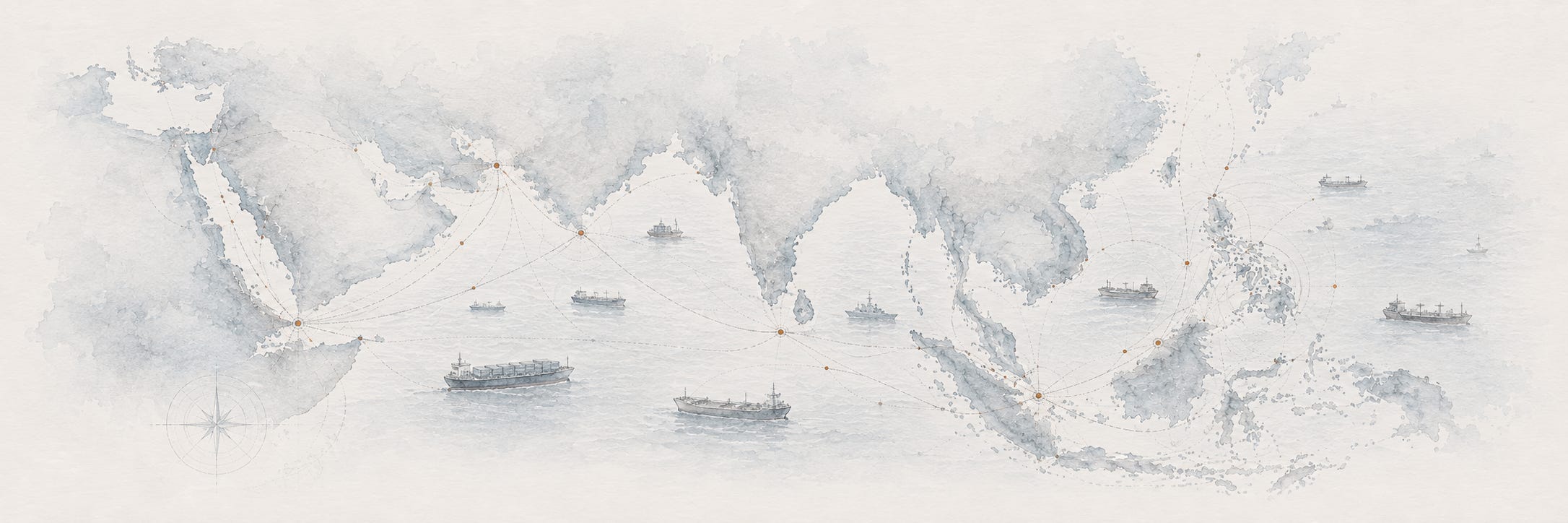
Di Dongsheng (翟东升): The US has not fully accepted the “relationship of constructive strategic stability” and may be preparing leverage against China’s weak points, the major one being its maritime routes. Geopolitical changes around the Panama Canal, Greenland and Iran are warning signals that the openness of the oceans is moving towards an end. Counting the US alliance network and overseas bases, China remains far from surpassing US maritime power and may need a 30-year effort to secure control of the seas. Besides channelling funds into the navy, China must foster a new national consensus: only by “regaining” control of the oceans can the Chinese nation have a future. — Associate Dean, School of International Studies, Renmin University of China (翟东升的全球政治经济研究, 25 August).
Zhao Long (赵隆): Under the dual impact of the Ukraine crisis and the Middle East crisis, the vulnerability of critical maritime routes has become even more pronounced. The rapid proliferation of long-range precision-strike weapons and low-cost unmanned platforms has increased asymmetric combat capabilities, while critical routes are increasingly becoming an important lever through which certain countries seek strategic competitive advantages and dominance over industrial and supply chains. The international community should uphold freedom of navigation, common, comprehensive, cooperative and sustainable security, and improve the provision of public goods for critical maritime routes. — Director and Research Fellow, Institute for International Strategy and Security, Shanghai Institutes for International Studies (环球时报, 24 August).
Hu Bo (胡波): Developments in the Strait of Hormuz have caused enormous volatility, but global maritime chokepoints remain stable and secure overall. The Strait of Hormuz is exceptional—other routes have alternatives and other countries would find it difficult to imitate Iran’s approach of blockading the strait. Military strength has its limits—safeguarding the security of maritime passages must still rely primarily on diplomatic, economic, financial and legal means. As the world’s largest goods-trading nation, China cannot pursue absolute security in the way the United States does. China should maintain strategic composure and not become excessively anxious merely because certain countries occasionally “talk tough”. — Director, South China Sea Strategic Situation Probing Initiative (溟坤数科, 9 August).
4. Middle East

Zhou Li (周力): The principles embodied in the “Mecca Agreement”—“collective self-strengthening, openness and inclusiveness, and defensive self-protection”—have points of convergence with the core spirit of China’s Global Security Initiative. The agreement’s political significance exceeds its military significance, communicating to the outside world a strategic posture of “collective self-strengthening and not relying solely on the United States”. It is an inevitable product of deepening global multipolarity, catalysed by the US-Israeli conflict with Iran, which has further exposed the inherent fragility and hypocrisy of the US-led unipolar security architecture. — Former Vice-Minister, International Department of the CPC Central Committee (爱思想, 19 August).
Sun Degang (孙德刚): The Gulf Arab states’ philosophy of “security depends on the United States, development depends on Asia” is coming under strain as conflict in the Middle East intensifies, forcing them to pursue divergent policies that nonetheless reflect diversification amid declining US hegemony and weakening security commitments. Saudi Arabia and Kuwait are pursuing strategic autonomy by expanding cooperation with additional partners. Oman and Qatar are pursuing strategic balancing, maintaining close relations with the US while engaging Iran. The UAE and Bahrain, meanwhile, remain dependent on US support. — Director, Center for Middle Eastern Studies, Fudan University (光明日报, 2 August).
Niu Xinchun (牛新春): The structural trajectory of US–Israel relations is one of gradual long-term weakening due to the erosion of two traditional pillars: ideological affinity and strategic alignment. Ideologically, Americans, particularly Democrats, increasingly see Israel’s “democratic” character as fading and moving away from American values, while polling shows growing public hostility towards Israel. Strategically, US and Israeli interests are increasingly misaligned: Washington is pursuing strategic retrenchment in the Middle East, while Israel seeks to reshape the regional balance of power through military force against its regional adversaries. — Executive Dean, China–Arab States Research Institute, Ningxia University (环球时报, 11 August).
Guo Xiaobing (郭晓兵): Iran’s asymmetric operations have broken through the US–Israeli air and missile defence system, disrupting the underlying logic of aerial warfare. Faced with the impact of Iran’s swarm tactics, the West is accelerating adjustments to air and missile defence systems. Emphasis will be placed on developing short-range laser interception capabilities, with reliance on high-end missiles abandoned in favour of a graduated, layered defence system. Artificial intelligence will likely be used to remedy weaknesses in low-altitude detection, attack and defence will be integrated in order to strike threats at their source, and manufacturing capacity across the entire industrial chain will be strengthened. — Director, Arms Control Research Centre, China Institutes of Contemporary International Relations (中国网, 11 August).
5. Europe
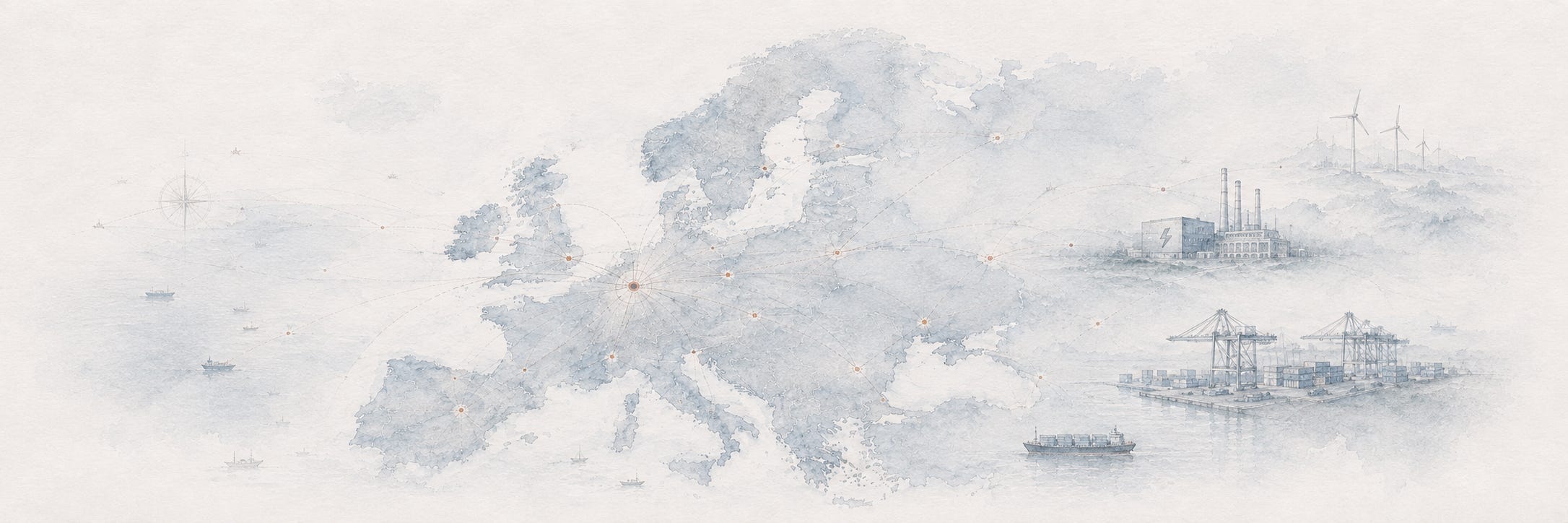
Duan Demin (段德敏) & Wang Hongyi (王弘毅): Europe’s geoeconomic map is being redrawn and Southern Europe is shifting from the market periphery towards becoming a destination for investment into electrification-related industries. Following the EU’s imposition of anti-subsidy duties on Chinese EVs, Chinese firms must resolve industrial frictions by implementing a localisation model of “manufactured in Europe, designed for Europe, maintained by European workers”. Political change in Central and Eastern Europe provides an opportunity to abandon the rigid model of tying relations to “top-leader projects”. In security-conscious Northern Europe, Chinese firms should use minority equity stakes, joint R&D, replaceable supply-chain models and avoid controlling acquisitions. — Director of Centre for European Studies, Peking University; Associate Professor, Centre for Central and Eastern European Studies, Beijing Foreign Studies University (北京对话, 9 August).
Wang Yuyan (王语嫣) & Wang Shuo (王朔): France has become the “standard-bearer” of European economic protectionism, turning French concerns into common European anxieties and French initiatives into EU operating rules. Europe is facing competition from Chinese manufacturing to the East and US subsidy policies to the West. Whereas the “China shock” of the late twentieth century was concentrated in labour intensive industries, the new shock has penetrated into traditional areas of European strength. France has shaped a roadmap for the EU’s direction of travel, “herding” member states towards trade defence, industrial support and greater “economic sovereignty”. — Research Assistant and Professor, School of International Relations, Beijing Foreign Studies University (世界知识, 25 August).
6. Russia & East Asia

Zheng Jiyong (郑继永): Beijing is adjusting its policy priorities towards North Korea—it recognises that immediate denuclearisation of the peninsula is not realistic, while deepening Moscow–Pyongyang relations give North Korea greater strategic autonomy and make its behaviour more difficult to predict. The greatest risk from deepening Russia–North Korea cooperation is that it provides the US, Japan and South Korea with a powerful pretext for strengthening security cooperation. China needs an institution-driven policy towards North Korea, emphasising formal cooperation mechanisms and institutionalised communication channels. Beijing also hopes to involve North Korea in more multilateral cooperation platforms. — Professor and Dean, Institute of Country and Area Studies, Tianjin Foreign Studies University (Foreign Affairs, 10 August).
Zhou Li (周力): Russia has demonstrated surprising resilience under Western sanctions, but this has been more a matter of passive adaptation than active breakthrough—the Russian economy faces erosion of its long-term competitiveness as military mobilisation, capital outflows and tight monetary policy squeeze civilian investment. External pressure is “resonating” dangerously with internal structural weaknesses. Former VEB chief economist Andrei Klepach argues that Russia finances the world while the world finances Ukraine, and warns that a social crisis is “almost certain”. Klepach is a genuine patriot, while Putin’s response is evidence that he is listening to expert opinion. — Former Vice-Minister, International Department of the CPC Central Committee (爱思想, 24 August).
7. Economy

Dong Yu (董煜):Four “Zhong Caiwen” articles published in quick succession this August address misunderstandings regarding the leadership’s responses to China’s economic challenges. The government is working both to “accelerate the transition between old and new growth drivers”, but this does not involve the abandonment of traditional industries, whose upgrading remains an important part of economic planning. Meanwhile, the absence of large increases in stimulus is due to planners aiming for targeted structural measures to avoid creating economic dependence on policy support. The economic priorities are to continue focus on the provision of high-quality services, leverage private investment by providing private companies with a list of “national projects” eligible for support, and aim to “create a fair and orderly environment for market competition”, curbing local protectionism and duplicated construction. — Executive vice-president, China Institute for Development Planning Tsinghua University; Former deputy director, Second Economic Bureau of the Central Financial and Economic Affairs Commission (三里河,25 August)
Yao Yang (姚洋):The prevailing explanation that China is passing through a “gear shift” period while transitioning from property to an economy driven by technology obscures the pressing need to focus on boosting weak demand. Property and construction are huge industries, and there is space for it to expand as rural populations continue to move to cities, or migrate from third- and fourth- tier cities to first- and second- tier cities. Furthermore, while a strong property sector does not suppress the development of high tech, excessive investment in high tech sectors can crowd out consumption as it reduces local governments’ ability to subsidise household consumption. The idea that local governments may eventually be able to replace income previously generated by property through returns on equity investments in technology sectors is “extremely naïve”. — Dean and Professor, Dishui Lake Advanced Finance Institute, Shanghai University of Finance and Economics (姚洋说, 21 August)
Sun Liping (孙立平):The controversy surrounding recent statements by a Peking University professor on social security for gig workers draws attention to a salient fact: China’s flexibly employed population is growing rapidly, and the traditional “five social insurances and one housing fund”, financed jointly by employers and employees, is not adapted to this kind of work. The professor suggested that gig workers with irregular schedules enjoy a greater degree of “freedom” and that it therefore does not make sense to include them in the same social-security system as those in formal employment—a claim that is difficult to accept. However, her core proposal of introducing an “unbundled” and flexible system of social-security protection for mobile workers would function well as a transitional arrangement towards fuller protection in the future. — Retired Professor of Sociology, Tsinghua University (老孙荐读, 26 August)
8. Going Out

Qin Hui (秦晖): The traditional Chinese overseas infrastructure model is precisely the opposite of the colonial model—rather than using local workers for hard labour, Chinese firms dispatched their own migrant labour abroad. However, this is now changing as rising wages and local resentment push Chinese firms towards local hiring. The Tindouf–Béchar railway illustrates this “integration with international standards”, with skilled workers and managers coming from China and locals performing the heavy labour. As such, China’s “low human-rights advantage” is being eroded, though the old model has not disappeared, as demonstrated by the BYD “slave labour” case in Brazil. — Professor Emeritus of History, Tsinghua University (失語者, 7 August).
Ju Yue (琚悦) & Chen Qi (陈琪): Global critical-mineral value chains are shifting from a model in which “resource-producing countries supply minerals and China processes them” towards one in which “resource-producing countries retain the value chain”, diminishing China’s control over processing capacity. Across resource-rich African countries, export controls, industrial-chain localisation and changes to ownership and operating rights are turning temporary interventions into structural norms. China must move beyond the role of “resource acquirer” towards “two-way empowerment”, using joint ventures, technology sharing and local processing to align investment with African development goals. — Lecturer and Researcher, respectively, Baize Institute for Strategic Studies, Southwest University of Political Science and Law (白昃研究, 23 August).
9. AI & Tech
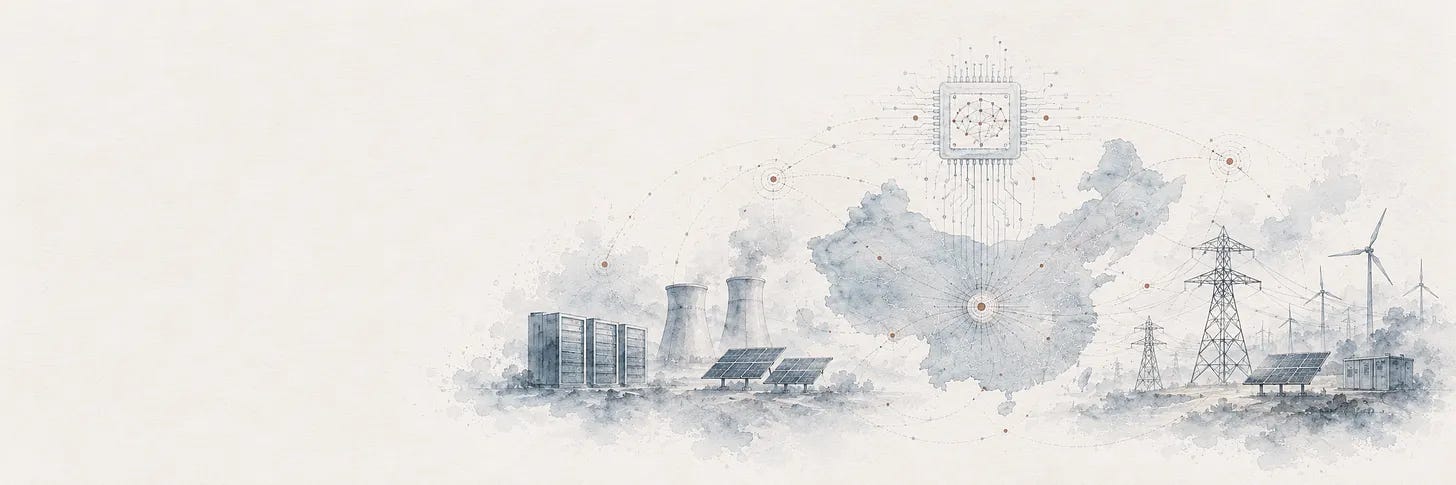
Huang Yutao (黄宇韬): The key arena of competition between Chinese and US AI is shifting to one of ecosystems, rather than purely the performance of the models. The Trump administration has rescinded many of the Biden restrictions on global exports, emphasising export of the “full stack”. As China cannot replicate this model, it is focusing on “token exports”, a non-monopolistic business model that is attractive to price-sensitive users. However, Chinese token exports generally run on overseas data centres—a far cry from the ideal of using local electricity and national compute. The main challenges for this model are balancing overseas and domestic demands for inference and establishing trust in Chinese companies’ handling of overseas data. — Assistant Research Fellow, Global Governance Division, Institute of World Economics and Politics, Chinese Academy of Social Sciences (FT Chinese, 24 August).
Hou Hong (侯宏): The emergence of strong voices in the US tech industry in support of competing on the open-source front signifies a growing US industrial consensus on the importance of ecosystem diffusion to national AI competitiveness. However, while Chinese companies’ open-source approach may serve the national interest, the reality is that the difficulty of earning profits on open-source technology means that the industry’s future business model is uncertain. The open-source model may yet find a way to “save itself”: Kimi recently modified its K3 open-source terms to require overseas cloud platforms deploying its model to sign a separate agreement, departing from the classic definition of open-source and offering a potential profit-making path forward. — Assistant Professor of Management, National School of Development, Peking University (侯宏文存, 16 August).
Liu Shaoshan (刘少山): Energy is not currently the main price constraint of artificial intelligence model-inference costs, but as agentic AI develops, a cheap supply of energy will become a major source of China’s comparative advantage in AI. At present, cheap electricity can partially relieve the pressure that poor chip efficiency might place on operating costs. However, it is not enough to simply continue providing data centres with cheap electricity. To avoid idle capacity, policy needs to focus more on improving actual utilisation rates through better coordination between computing and grid supply, as well as developing the capacity to provide compute services to overseas customers, at lower costs than the US. — Director, Embodied Intelligence Centre, Shenzhen Institute of Artificial Intelligence and Robotics for Society (环球时报,26 August).
10. State & Society

Ding Xueliang (丁学良): This year’s Fields Medals have prompted reflection among mainland scholars: whereas the winners had access to five-to-ten-year research funding, Chinese mathematics and basic-science researchers complain that annual reporting requirements push them towards projects seeking “quick success and immediate benefit”. Government funding should not favour applied disciplines while cutting support for abstract theoretical research. Some discussion encouraging students to study abroad has already been abridged, yet the winners’ decision to pursue postgraduate study in the West was crucial. Internationalised teams are also less prone to rigid hierarchy, arbitrary administrative interference and senior researchers abusing their positions. — Professor Emeritus, Hong Kong University of Science and Technology (學人, 2 August).
Li Houchen (李厚辰): The debate over whether Fields Medallist Wang Hong should return to China reveals a deeper consensus that an individual’s career is a national question open to collective judgement. Even official commentary’s “tolerance” over Wang Hong staying away implies that her choice requires permission. This system of absorption is not accomplished through propaganda alone, but is a Chinese-style logic in which investment amounts to a claim over someone’s person. The real question is whether those ordinary researchers who have no Fields Medal also have the right to choose where they live, whom they work with and whom they thank. — Independent scholar and columnist (看理想, 10 August).
Yu Huiwen (于会文): To promote a system in which cadres can “go up and down”, cadres must genuinely be able to “go down”, with the “soft ailments” of mediocrity and laziness treated as grounds for demotion alongside the “hard injuries” of disciplinary or legal violations. Hohhot is responding by turning cadre evaluation from “judging horses” to “racing horses”, using monthly tracking and differentiated performance indicators to identify officials for removal. Since the reshuffling of Hohhot’s Party and government leadership teams in 2021, 11 cadres have been removed from leadership teams for shortcomings including weak public-engagement skills and an inability to handle difficult and complex situations. — Member, Standing Committee of the CPC Inner Mongolia Autonomous Regional Committee; Party Secretary of Hohhot (求是, 1 August).
Yang Zaiping (杨再平): The principal fetter on China’s economy is now the resurgence of “ultra-leftist” ideological currents, which have caused a lack of confidence among private businesses, foreign investors and the market. The old planned-economy system has largely been reformed, but the process is not complete. The basic spirit of reform and opening since Zhu Rongji’s period can be summarised in three words: marketisation, rule of law and internationalisation. This was true then and will remain true for a long time to come—successful reforms must retain continuity rather than constantly “flipping the pancake”. — Founding Secretary-General, Asian Financial Cooperation Association (IMI财经观察, 16 August).
Liu Dong (刘东) & Zhang Jun’an (张君安): The “debt spiral” among young people is a defensive strategy for survival in an uncertain environment and a consequence of structural risks being transferred downwards onto vulnerable groups. Online-lending platforms and illegal credit providers target young people who urgently need funds or lack self-control. The government should increase subsidised rental housing, improve subsidies for training and education, as well as strengthen the social-security system’s buffering role. Regulators should also impose strict combined credit ceilings on young people who don’t have stable repayment capacity and prevent borrowing from multiple lenders. — Associate Professor and Head of the Department of Social Work and Lecturer in Social Work, Shanghai Business School (文化纵横, 26 August).

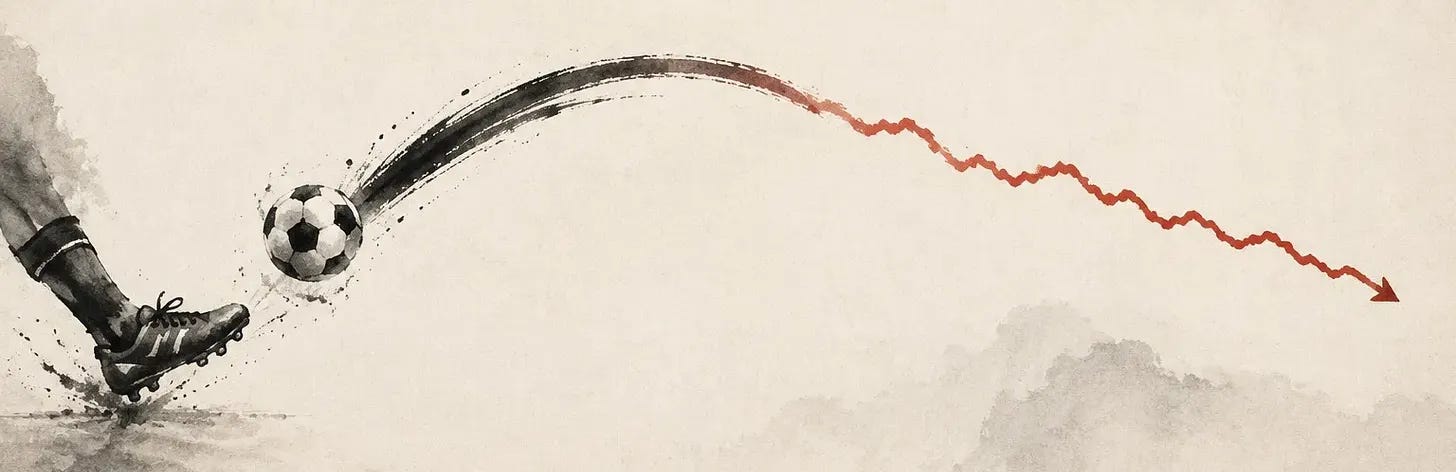
Why China’s Football Problem Is an Economic Problem | Li Xunlei| (28 August)
Li Xunlei, chief economist at the securities firm Zhongtai International, is among the most engaging proponents of economic rebalancing in China. In the this article, he cites China’s World Cup qualification woes as among the consequences of a growth model that prioritises fixed-asset investment. With returns on investment falling and growth in local government debt outpacing GDP growth, Li presses the case for an urgent shift towards growth anchored in household consumption. He argues that failure to carry out such a shift represents an obvious, but neglected, risk factor in China’s economy—what one might also call a “grey rhino”. Read here

Xu Jilin on the Politics of Resentment among China’s Youth (26 August)
In this piece, introduced by Timothy Cheek, Xu Jilin dissects the phenomena of “lying flat”, “involution”, and the troubling attitudes of China’s youthful “post-90s” generation. That attitude, expressed in the low motivation of lying flat and distrust of the meritocracy described as involution—in which more work does not result in advancement—is described by Xu as yuanhen, “resentment” in simple terms. Xu’s essay is both a recognition of the social experience of this generation (and a useful introduction to readers of Sinification) and also a warning to those with the power to give this youth some hope and opportunity. As he concludes, “These are grave questions that China must now confront in earnest.” Read here

Sun Liping and Li Daokui Debate China’s Disconnected Growth (20 August)
Whether expressed as “strong supply, weak demand”, overcapacity or some form of a “K-shape”, a consensus has emerged that insufficient demand is the central weakness of the Chinese economy. The persistent debate centres on how best to fill that demand gap. Here, Li Daokui argues that while new industries have failed to expand sufficiently to replace the old ones, the deflationary “black hole” of local government finances has exerted a cooling effect on the entire economy. In the same edition, Sun Liping provides a riposte to Li Daokui’s diagnosis. Read here
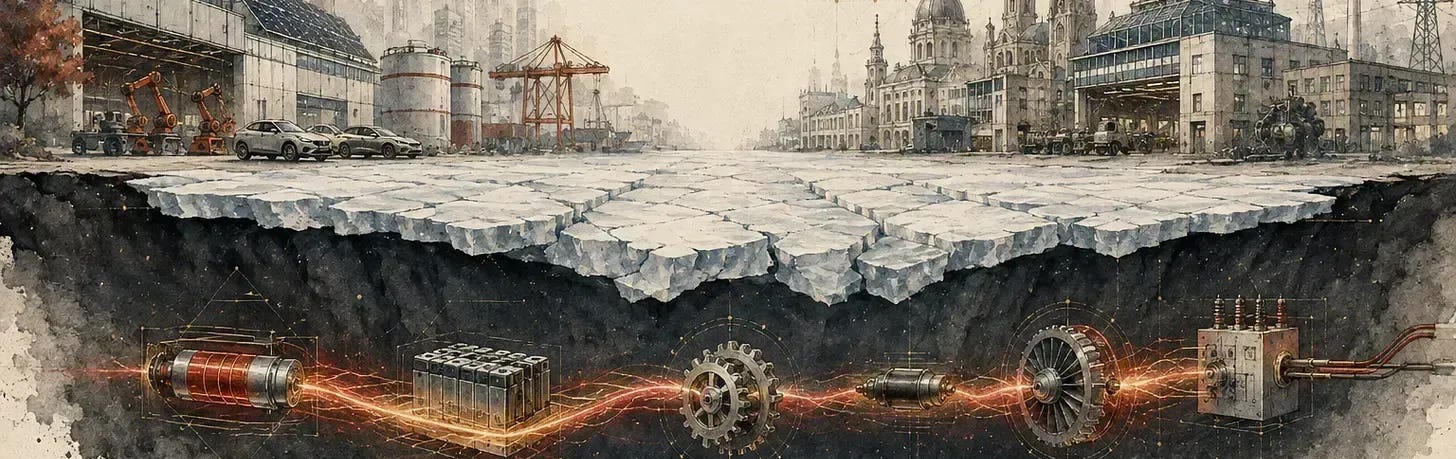
Understanding Europe’s “China Shock” Anxiety | Huang Yiping (19 August)
The full-scale trade war that Huang Yiping warns of here has not yet come to pass, but the reprieve may be temporary. Huang is very much an establishment voice and he doesn’t stray far from the mainstream framing, but he takes European anxiety far more seriously than most and makes an important concession along the way. This should offer some encouragement to EU policymakers, who for years have felt that their concerns have fallen on deaf ears. However, those same policymakers may be less heartened by Huang’s reading of European fragmentation and his later recommendation that China “bypass highly politicised EU-wide negotiating frameworks”. Read here

Strong Supply, Weak Demand, Little Urgency? | Economic Digest: July 2026 (14 August)
“K shaped” is July’s defining buzzword, with a flurry of articles exploring China’s simultaneous boom and bust in different parts of the economy through this alphabetic metaphor. Taken together, this edition contains a remarkable range of competing prescriptions, but many do converge around a sense that insufficient demand and economic imbalance require a more urgent policy response. It is ironic then, that the most recent piece in the collection—Zhang Jiqiang’s reading of the Political Bureau of the CPC Central Committee meeting held on 30 July—concludes that, in Zhang’s opinion, “the urgency of stepping up policy support is not high.” Read here

Dreaming of Zhu Rongji’s China | Zhao Jian (14 August)
The death of Zhu Rongji, the former premier of China who spearheaded market-oriented economic reforms during the 1990s, was announced on Wednesday. This obituary is by the economist Zhao Jian, an advocate of renewed marketisation and an admirer of Zhu’s forceful approach to driving through a series of state enterprise restructurings and market-oriented reforms. Judging by the article’s removal from WeChat a day after publication, it may have touched a nerve. Nominally written as an obituary for Zhu, the piece is really his lament for a bygone era when Chinese society felt confident and people said what they really thought. Read here

Advantage Does Not Equal Victory | Digest: July 2026 (4 August)
The celebratory mood that followed the Trump–Xi summit in May seems to have run its course. The prevailing assessment of US–China “strategic stability” remains broadly optimistic, but July’s commentary offers a more sober assessment of China’s strategic environment. July’s strongest writing qualifies confidence in China’s rise—American retrenchment is adaptive rather than terminal, the trade war is survivable but unavoidable and China’s growing power is running ahead of the institutional, diplomatic and intellectual capacities needed to translate it into durable gain. Read here
N.B. Sinification features a broad spectrum of voices, ranging from conservative hawks and state propagandists to more moderate and liberal thinkers. Readers are encouraged to bear this diversity in mind when engaging with the content.


