
This is guest post from Tim Culpan, a journalist and 27-year Taipei resident. Tim worked for Bloomberg News as the Taipei technology correspondent and then opinion columnist until 2024, when he went independent and launched the excellent Culpium on Substack. I am a subscriber and he pitched me on a piece about the November 28 Taiwan municipal elections I thought it could be useful for Sinocism readers. Let us know what you think in the comments, and do check out more of Tim’s work over at Culpium. - Bill
Good Evening from Taipei,
A few weeks ago I pitched to Bill the idea of writing a piece for Sinocism about the November 28 Taiwan municipal elections. City and county mayors will be elected, along with thousands of other local representatives. It’s not a nationwide poll.
“It’s a plebiscite on local issues,” I told him.
My reason for publishing through Sinocism, instead of my own outlet Culpium is that Sinocism is the premier foreign destination for discussion on China politics and policy. I could foresee that many people would mistake this local Taiwanese election as some kind of referendum on Taiwan’s China policy.
I recognize the irony of publishing a piece arguing that Taiwan’s election is not about China in a publication focused on China. But by explaining the nuances of Taiwanese domestic issues, my hope is that China watchers will understand how and why citizens in this democracy make decisions. Quite often these decisions appear counter to what outsiders feel should be the wise & logical choice vis-a-vis Beijing.
Sinocism readers seem like the perfect audience for such a discussion, and I am grateful to Bill for lending me your ears.
One Election; 11,000 Positions
Taiwan has 23 million people, 19.7 million voters, and 22 cities and counties. Candidates are vying for four-year terms and can serve a maximum of two terms. Victory is determined by a first-past-the-post system with no preferences and no postal or electronic voting. Whomever gets the most votes from in-person voting wins, even if it’s not a majority.
Among the seats to be filled are mayors (city), magistrates (county), and municipal councilors.
Yet Taiwan’s administrative divisions get even smaller, like Russian nesting dolls, all the way down to local villages and neighborhoods (also called wards or burroughs). All up, 11,051 seats are to be filled, and village chiefs (村長 - cunzhang) plus neighborhood captains (里長 - lizhang) will account for more than 7,700 of those positions.
The largest electorate to be served by this election is New Taipei City with 4 million residents, the smallest being Rongxin Village in Nantou County with just 36 souls.
My point is that this really is local. Super local. As a result, policy focus is on local rather than national issues.
All Politics is Local
What voters care about most varies by region. In the north (Taipei, Keelung, Taoyuan), housing and urban renewal is a key concern, alongside transport and public safety. In the center (Taichung, Changhua), food scandals and public health predominate. While in the south (Tainan, Kaohsiung), wages and flood control are particularly local topics.
This regional variation dilutes the value of national-level policies and reduces the importance of broad party platforms. As a result, the Kuomintang’s (KMT) perceived pro-business reputation carries less weight while the Democratic Progressive Party’s (DPP) old-school social justice platform is getting fresh oxygen.
To be clear, it shouldn’t be taken as fact that the KMT is pro-business and the DPP is pro-social. There’s plenty of evidence to suggest the reverse is sometimes true. Yet, the basic ideological divide persists in the same way that the Tories and Labour occupy different sides of the UK political spectrum.
Taiwanese Taipei
Traditionally, Taichung in central Taiwan is seen as a “swing state” and barometer of changing political winds across the country. Taiwan’s geographical layout almost perfectly maps to its political layout. Taipei and New Taipei City in the North are deep blue (KMT) while Tainan and Kaohsiung in the South are deep green (DPP). These shades start to blend as you move toward Taiwan’s geographic center.
This year, however, something extraordinary is happening.
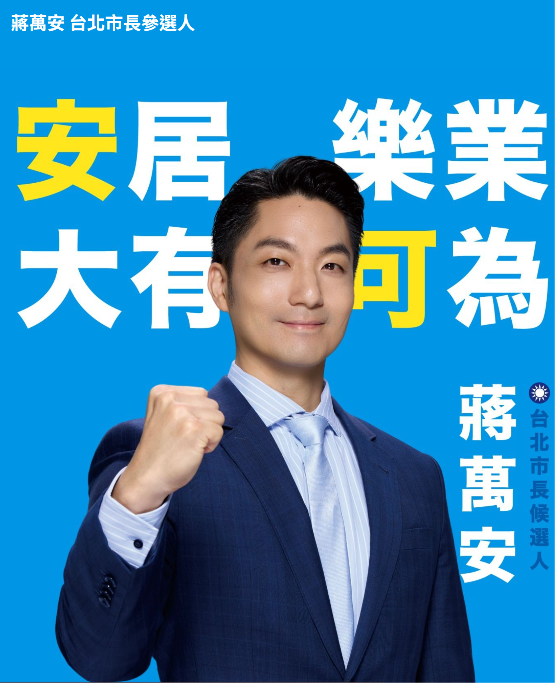
Taipei City, the national capital and seat of economic power, may change colors. The KMT’s Chiang Wan-an won the 2022 mayoral election, but there’s a high chance he’ll lose his post this election.
Instead, polling shows that it’s likely the DPP will take Taipei City Hall for the first time since Chen Shui-bian’s single four-year term which spanned 1994-1998. (The “whites,” lead by independent populist Ko Wen-je, split the vote of the two major parties and took Taipei City from 2014 to 2022).
Surveys have them within a few points of each other, and the margin of error is such that I am not confident calling this race. Also, you won’t see new polls in the coming week because Taiwanese law prohibits them from being published in the 10 days leading up to an election.
Chiang is claimed to be a great grandson of Generalissimo Chiang Kai-shek through an extra-marital affair, with his family name enjoying the cachet that comes with such a connection. To his credit though, Chiang’s resume is impressive in its own right with academic credentials that culminate in a Juris Doctorate Degree (JD) from UPenn’s Carey Law School and admission to the California Bar.
City Vision
But voter’s adulation for Chiang is waning amid dissatisfaction over very local issues. Clean, efficient, and friendly on the surface, Taipei City is getting old. Vast tracts of its housing stock is over 30 years old with residential communities a stone’s throw from City Hall that are close to 50 years old (and which look every bit their age). At the same time, there’s a lack of new affordable housing coming on stream.
Urban renewal policies, which allow a building to be torn down and rebuilt if enough owners approve the measure, were supposed to ameliorate this problem. But the slow pace of new projects and the bureaucratic minefield involved with rehousing residents has caused great satisfaction among voters. Add to that a litany of small gripes like scooter parking, public smoking, traffic safety, and elder loneliness, and Chiang’s leadership has started to feel lacklustre in the eyes of many voters.
His challenger, Puma Shen of the DPP, has come out of the gate with a more polished vision for the city which he is pitching to voters under the slogan HEART (Habitat, Empower, Accompany, Resilience, Time). In truth, Shen’s policies aren’t vastly different to Chiang’s, but he’s successfully managed to stoke a renewed sense of pride among Taipei residents.
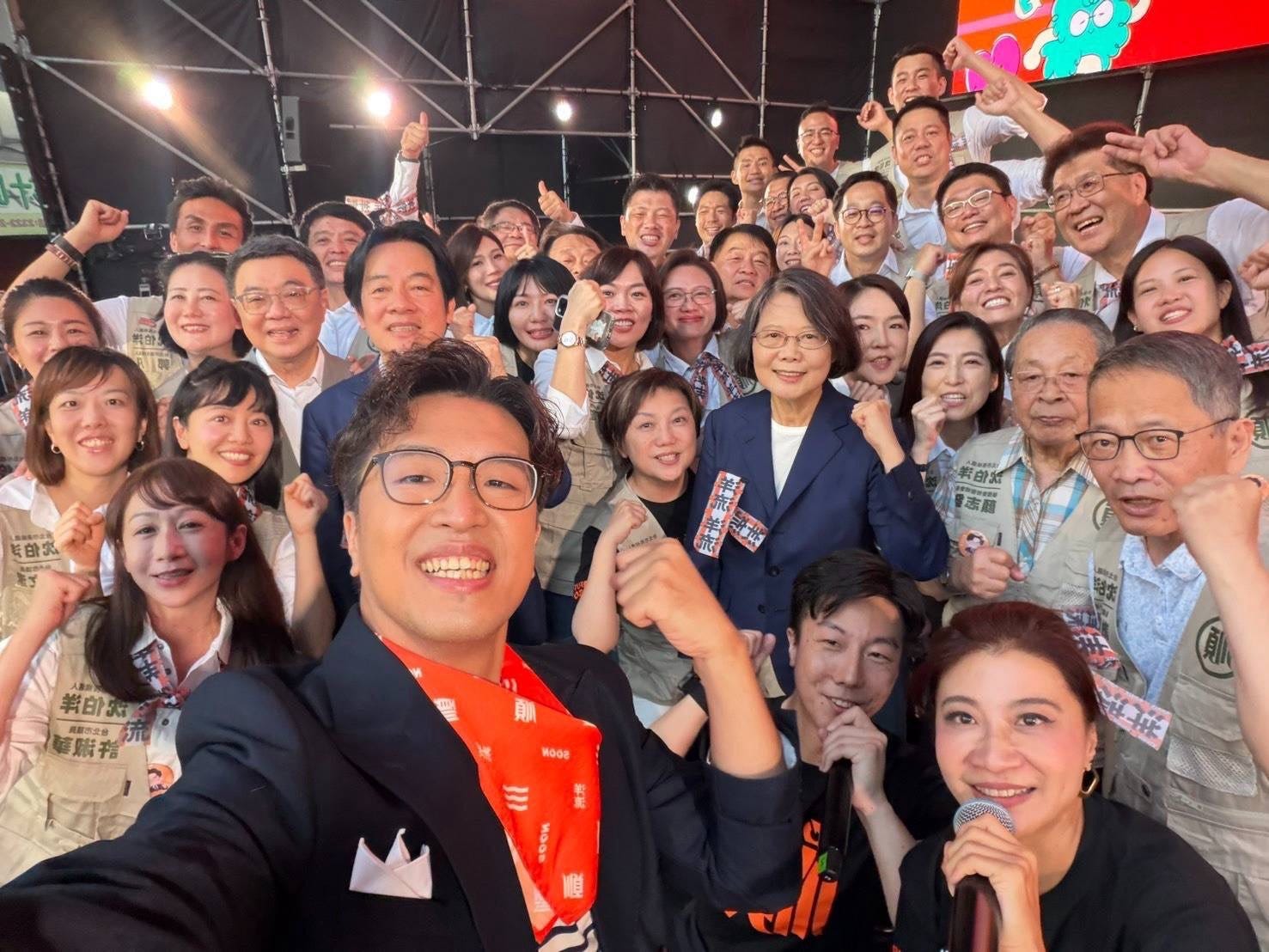
Currently a national legislator, Shen is a former criminology professor who gained recognition for his research into Chinese disinformation and cognitive warfare against Taiwan. That career trajectory took him to founding Doublethink Lab focused on cognitive warfare and Kuma Academy which conducts research and training into urban resilience (read: preparing for war).
Perhaps surprisingly, Shen’s China-focused background has barely featured in this campaign. Clumsily, though, Beijing has managed to burnish his credentials through a series of operations aimed at surveilling and curtailing him.
Local Matters Matter
Elsewhere in Taiwan, national issues like macroeconomic policy, defense, and China relations have also taken a backseat. In fact, political leaders have been excoriated for pandering too much to national interests over local issues.
Outgoing Taichung Mayor Lu Shiow-yen, for example, was once seen as a rising star within the KMT for her leadership in the this important benchmark city. Instead, she received significant backlash over her handling of a tainted cooking oil scandal in July this year. That incident comes eight months after Lu admitted that her administration mishandled an outbreak of African Swine Fever. Critics claim she cared more about the KMT’s national exposure than the concerns of her local constituents.
Elder Care, Traditional Industry
In central and southern Taiwan voters are honing in on specific issues, and candidates are adapting their policies to suit. Care for the elderly has become both an emotive and practical issue among families struggling to juggle work commitments with the burden of aged care. Wage disparity between traditional and tech industries is an acute problem outside the traditional tech belts (Hsinchu and Taipei) where old-school manufacturing industries dominate.
Because of the very local nature of each race, the results and implications of this nine-in-one local election will be difficult to parse. Although the ballot falls mid-way between the 2024 and 2028 presidential and legislative elections, this is not a mid-term election in the US sense.
It’s absolutely true that hard-core DPP and KMT supporters will make their choice regardless of the candidate or policies. But that loyalty is far weaker at the local level, making this much more a plebiscite on policies than party.
National Implications
That said, there are national implications, and China policy is a good case study.
I’d argue that in the US, guns are an issue of ideology not merely policy. And most voters do not choose a candidate based on ideology as long their ideologies are not vastly in conflict. Having the ‘correct’ position on guns won’t be enough to win a majority of votes, but having the ‘incorrect’ position might lose you an election. The best choice for a candidate is to just shut up and not talk about it
However, the factional nature of democratic systems means that losing an election on policy necessarily hampers your ability to control the conversation on ideology. That’s unless some external force — a mass shooting or missile crisis — puts that ideological discussion back on the front page.
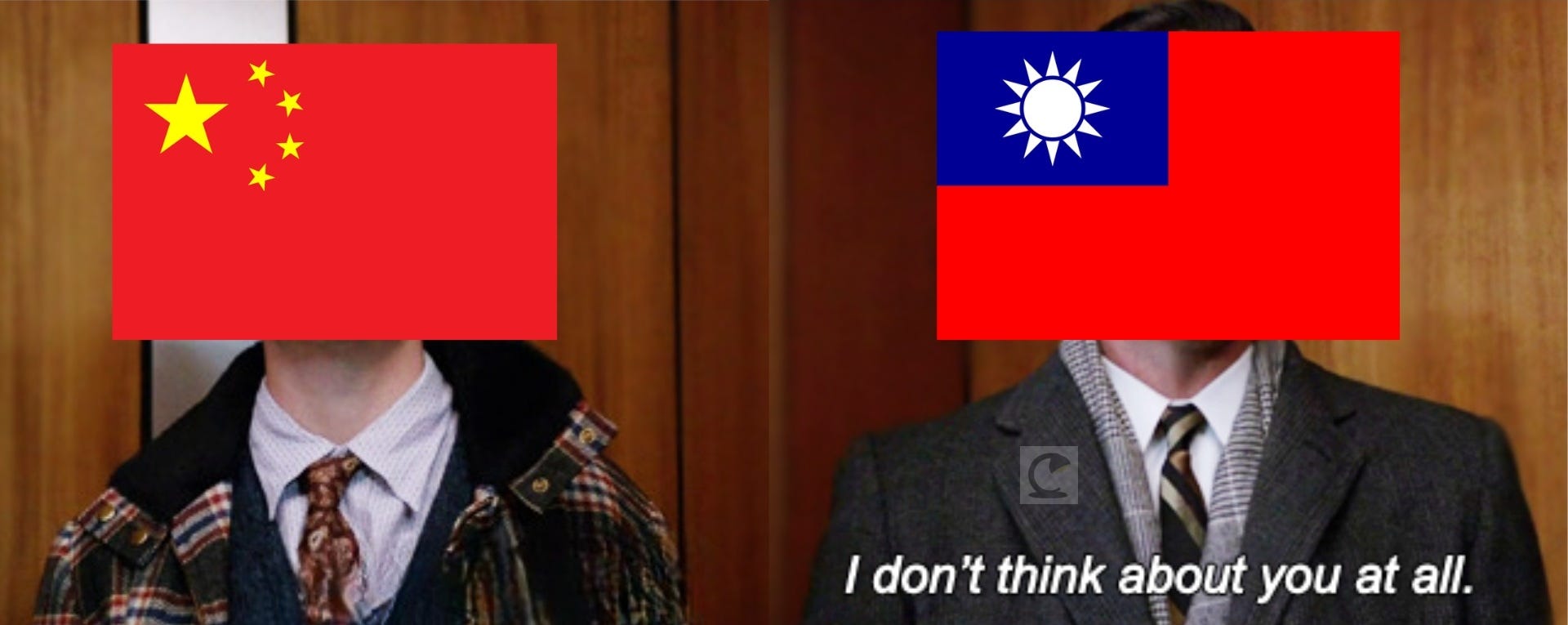
Taiwanese views on relations with China fit into a similar paradigm. It matters, but it doesn’t occupy their daily thoughts unless reminded. Local candidates have largely been smart enough to not talk about China and instead focus on more relevant issues.
If Chiang Wan-an loses Taipei City, it won’t be because of his China policy, and ergo it shouldn’t be seen as a challenge to Beijing or its leader Xi Jinping (XJP). If you come across a headline in foreign media which says this Taiwan election is a rebuke to China, then I implore you to cancel your subscription.
Ideological Control
Yet a DPP win will help the ruling party control the ideological debate against a KMT that’s struggled on the national level to offer anything beyond “all the way with XJP.”
KMT Chair Cheng Li-wun doesn’t appear smart enough to understand this reality. Her cozy-up-to-China policy won her support within the party because its leadership is stacked with pro-China hardliners, but it has alienated most of Taiwan, including thousands of KMT voters.
Read “War and Chips. And the KMT” at Culpium
Still, it appears to be the only policy Cheng has been able, or willing, to enunciate. In a briefing with the Taiwan Foreign Correspondents Club earlier this year, she waffled and dodged all manner of questions ranging from economics to semiconductor policy.
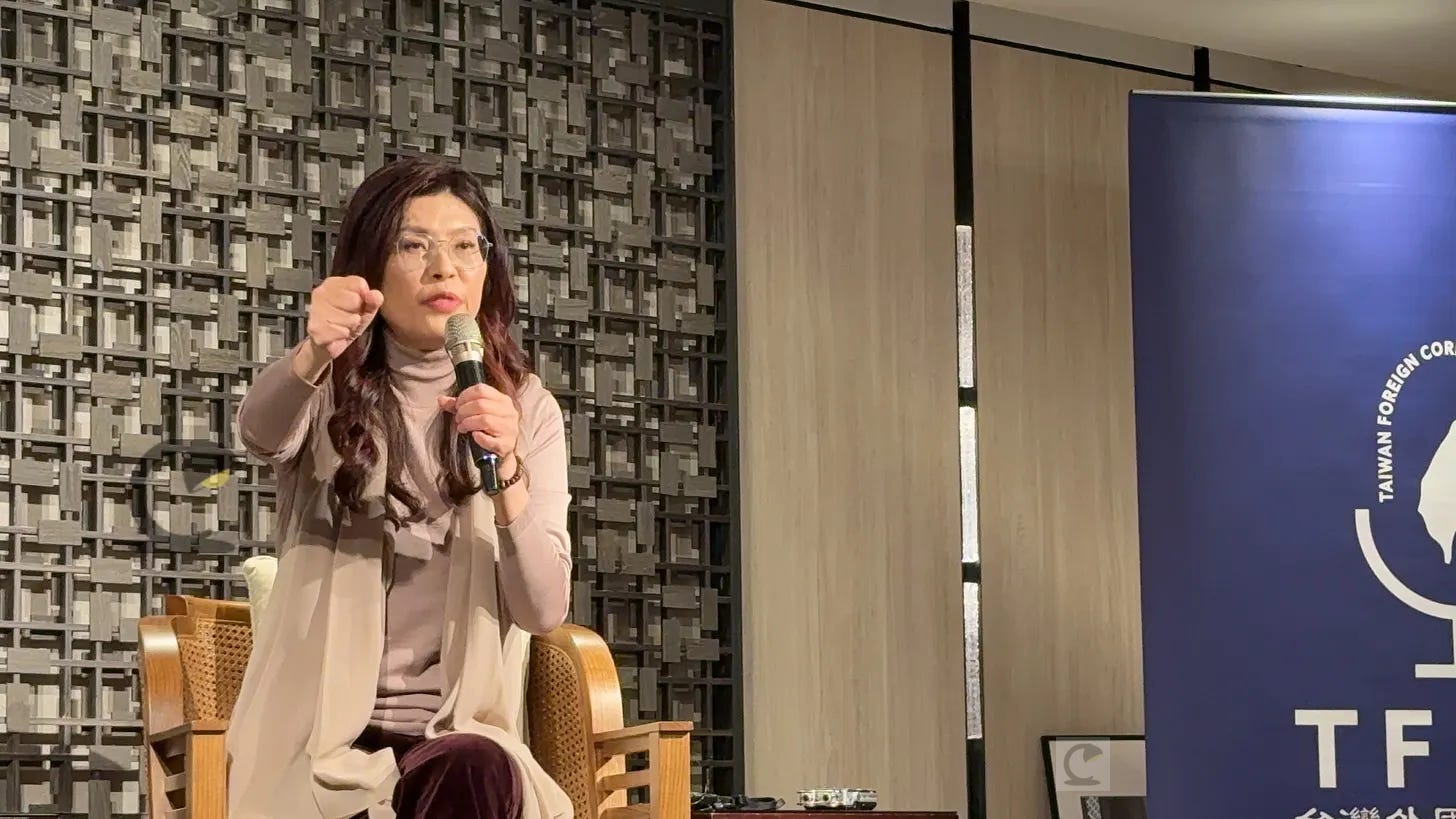
As a result of Cheng’s lack of policy depth in favor of stubbornly hewing to party ideology, some local KMT candidates have made the unusual decision of distancing themselves from the party Chair.
Like the GOP Losing Texas
It’s almost certain that Cheng will lose her Chairmanship should the KMT lose Taipei City because such a scenario would be akin to the GOP losing the Texas Governorship or Senate seat.
But her position is under threat even if Chiang holds on to Taipei City and the party loses other “safe” posts or simply loses ground across the more than 11,000 positions up for grabs. For example, the New Taipei City mayoralship which the KMT has held since 2005 has a very real chance of falling to the DPP.
If this happens, the ideological grasp which Cheng and her hardline supporters have over the KMT would weaken, ushering in a more conciliatory tone favored by younger party members. By this, I mean more readily embracing a Taiwan-first future for both the KMT and the nation, which would necessarily mean de-emphasising without fully abandoning its long-held China unification platform.
Beijing’s Finger on The Pulse
What this means for Xi Jinping and Beijing’s view of Taiwan, I can’t answer. Over the past 30 years, Taiwanese have de-emphasized the unification v independence debate in favor of real meat-and-potatoes issues like economics, public welfare, and living standards. Yet it seems to me, from my seat in Taipei, the Chinese Communist Party has been unable to keep up with this changing tone.
For a while, during the Ma Ying-jeou era of 2008-2016, it looked like Beijing got it: the way to Taiwanese hearts was through their wallets, and offering the economic benefits of close ties to China was a somewhat winning strategy.
The Sunflower Movement of 2014, coupled with Beijing’s crackdown on Hong Kong’s Umbrella Movement, and then the harshness of Covid have taught Taiwanese to distrust Beijing. From there, we’ve seen a continued disinformation campaign both overseas and domestically aimed at painting Taiwan’s economic future as bleak and its security future as hopeless.
I think this election will show that Taiwanese are not falling for it. They have real gripes, and electoral candidates across both sides of the political rainbow have stepped up to address those concerns. And as long as Taiwanese believe that their leaders are listening, acting, and improving then I think the constant barrage of disinformation will be increasingly ignored. I wish I could say the same for foreign observers who still cling to Beijing’s view of Taiwan.
Xi Jinping Thought
An interesting question I’d love to have answered is how Xi Jinping may act once he realises that Taiwanese are largely ignoring him as they focus on local issues. And that, my new Sinocism friends, is a topic I’ll let you all discuss.
Meanwhile, if you want to keep tabs on Taiwan, its technology sector, industrial development, and the Jensen Huang firestorm, then you’re welcome to come visit me over at Culpium.
Thanks for reading.
Tim
© 2026 Tim Culpan · Privacy ∙ Terms ∙ Collection notice
Start your SubstackGet the app
Substack is the home for writing, podcasting, and media founders.

Loved this piece, @Tim Culpan and thanks for publishing it @Bill Bishop.
While my personal opinions are usually at odds with the channel owner at Sinocism, I think Mr. Culpan's article is fairly well balanced. I was born and raised in Taipei and still visit there every one or two years.