
This monthly report is prepared for Sinocism by the excellent Sinification, an invaluable resource for understanding how domestic and international affairs are debated within the Chinese establishment. Thomas des Garets Geddes, will be in DC from 18–21 October and New York from 21–24 October. If you’re interested in Sinification’s work, would like to support it, or know someone Thomas should be speaking with, please do get in touch with him. They have several new research initiatives underway that are well worth hearing about. — Bill
Much of the commentary in September revolved around the strength and limitations of economic interdependence as a source of political power. Against the backdrop of “strategic stability”—or stalemate—in the US-China trade relationship, Wu Bingxuan and Huang Chaofeng advise Chinese firms to concentrate on trade diversification and developing sanctions-evasion tools against the prospect of expanding US trade controls and restrictions on Chinese firms.
Regarding the absence of a business delegation accompanying Xi to Washington for the summit last month, the well-connected political commentator “Chairman Rabbit” suggests China’s feelings of insecurity about the trading relationship may lie behind it. The presence of high profile Chinese CEOs could have invited scrutiny of their relationship with the state, or requests from Trump for them to invest in the US.
China-EU trade talks are ongoing, with a resolution hoped to be achieved by mid-October and a further escalation in trade tensions looming if the talks fail to deliver. While these talks take place, China’s global trade relationships are also in the spotlight elsewhere.
The “China squeeze” thesis, recently advanced by Arvind Subramanian and Shoumitro Chatterjee, continues to provoke indignation in China against the backdrop of Xi’s visit to New Delhi for last month’s BRICS summit. The economist Xia Chun rebuts the idea that China’s economic juggernaut is displacing industrial activity in developing countries, offering as he does so an interesting window into how many in China view the source of their industrial advantage. Liu Zongyi links the “China squeeze” concept to Indian policy circles and an attempt by New Delhi to compete with China for leadership over the Global South, while Jin Canrong advises Chinese enterprises to be cautious about investing in India.
Brazil, another Global South heavyweight, is already a rapidly growing destination for Chinese enterprises escaping the low-profit squeeze of race-to-the-bottom competition at home. Against the backdrop of the election race between Flavio Bolsonaro and Lula, several scholars look at how economic penetration and political influence interact. Li Wei observes that there is a mismatch between Brazil’s apparently “laid-back” approach to international affairs and the hope among some Chinese scholars that it could form a counterweight to the US in the western hemisphere.
Di Dongsheng and Zhao Yixian offer nicely contrasting prescriptions for Chinese businesses expanding their operations in Brazil. For Di, the goal should be to deepen Chinese influence in order to shift Brazil’s political and business climate in ways more favourable to Chinese firms. Zhao, meanwhile, suggests Chinese businesses expanding overseas should aim to build “a Brazilian company with Chinese strengths”, adapting to local requirements and labour practices from the outset. BYD, in particular, has drawn fire for its labour standards in the country.
On the domestic front, Yang Wenhui and Wu Xinye express thoughtful caution on the limitations of AI as a tool for improving governance, while a roundtable with some of China’s most influential economists sets out the main lines of debate over economic rebalancing and stimulus in China. Liu Shangxi, however, observes that beyond shuffling money around, resolving problematic moral hazard in China’s economy will require more thorough institutional reforms.
— James Farquharson
In Brief
Meng Weizhan on the midterms and the durability of Trump’s accommodation with China
Liu Chong on developing a shared US-China vocabulary of AI risk
Wu Bingxuan & Huang Chaofeng on strategies for evading the expanding US sanctions toolkit
Ren Yi (Chairman Rabbit) on the possible reasons underlying the absent business delegation on Xi’s visit to Washington DC.
Zhu Zhaoyi on the need to better define China’s security role overseas.
Huang Ping on the challenge posed to certain middle powers’ leverage over AI supply chains by US–China accommodation
Sun Chenghao & Zhang Xueyu on how AI could drive more intense nuclear competition
Zhao Hongtu & Chen Wenlin on the rise of “electricity powers” and Europe’s energy dilemma
Li Wei on the gap between China’s commercial presence and America’s social influence in Brazil
Di Dongsheng on Chinese firms’ encounters with Brazil’s labour protections and development politics
Zhao Yixian on mitigating the risks faced by Chinese companies setting up operations in Brazil.
Liu Zongyi on India’s BRICS ambitions and competitive coexistence with China
Jin Canrong advising caution to potential Chinese investors in India
Xia Chun on land reform, caste and the roots of China’s manufacturing lead over India
Li Shenghua & Wu Wenzhuo on the strategic implications of North Korea’s current leverage over Russia
Ju Jiandong, Justin Yifu Lin, Yu Yongding, Yao Yang & Li Xunlei on China’s fiscal stimulus choices
Liu Shangxi on the obstacle posed by moral hazard to China’s economic transition
Yang Wenhui on how AI use could come into tension with local officials’ discretion and initiative
Wu Xinye & Wang Zice on how AI-assisted grassroots governance could simply amplify the loudest voices
Huang Rihan & Shi Yukun on the strategic purpose of US-China competition in orbital computing
Liu Yunshan on the issue of “exam specialists” among the younger generations
“Wen Ping” on algorithm-driven pseudo-history and upholding the correct national narrative
1. US-China
Meng Weizhan (孟维瞻): A narrow Democratic House majority would make Trump’s accommodation with China more politically costly, while leaving him substantial control over policy. Investigations, hearings and budget conditions could expose concessions to accusations of sacrificing national security for trade deals, and Democratic cooperation with Republican hawks over advanced chips, AI computing power, Taiwan and secondary sanctions could intensify this pressure. The main risk is that congressional pressure over export licences, sanctions and investment makes Trump’s existing accommodation with China harder to sustain, gradually eroding the summit’s stabilising effect. – Associate Research Fellow, Institute for Advanced Study in Social Sciences, Fudan University (Greater Bay Area Review, 28 September)
Liu Chong (刘冲): For a China-US cooperation framework on AI governance to succeed even as competition intensifies, a shared understanding of risk will be necessary first. The threshold for slowing or stopping AI training should depend less on a definition of whether AGI has been reached than on whether existing safeguards can reliably constrain a model. Governance standards should specify which combinations of capabilities warrant closer monitoring and what kind of abnormal behaviours warrant slower or suspended training. It may then be possible to establish scientific trust, mechanisms for sharing safety capabilities and a common understanding of when to apply the brakes. – Director, Centre for Technology and Strategy, China Institutes of Contemporary International Relations (CICIR, 28 September)
Wu Bingxuan (吴柄萱) & Huang Chaofeng (黄朝峰): The backdrop of stabilising US–China relations is not halting expanding financial restrictions on Chinese firms. Broader US trade controls require more diversified technology and supply chains, with risks assessed beforehand and alternative buyers and suppliers kept available. To counter tighter investment scrutiny, firms should expand de-dollarisation and use offshore financial centres and complex ownership structures to make transactions and acquisitions harder for US regulators to scrutinise. – Wu Bingxuan, PhD student, Koguan School of Law, Shanghai Jiaotong University; Huang Chaofeng, Professor and Deputy Director, National Institute for Strategic Studies, Shanghai Jiaotong University (Shanghai Jiaotong National Institute of Strategic Studies, 27 September)
Ren Yi (任意) / Chairman Rabbit : The absence of a full business delegation accompanying Xi to Washington may reflect concerns about sending the wrong policy signals domestically and internationally. Participation of Chinese companies in the delegation could mark private companies as state-linked targets for sanctions or distort domestic competition, or cause them to be pressured into US investments whose long-term security no White House administration can guarantee. Lower-profile exchanges through industry associations and state-level exchanges would allow greater economic cooperation while limiting these risks. – Political commentator (Tuzhuxi New Platform, 24 September)
See our separate analysis for a fuller account of the response in China to the Xi-Trump Summit:

2. Global Order

Zhu Zhaoyi (朱兆一): China’s Global Security Initiative needs to move from broad principles to practical security support. As Gulf states diversify their partnerships without giving up US deterrence, China could contribute crisis warning, mediation, shipping and energy security cooperation, humanitarian assistance and postwar reconstruction. This would give practical substance to “security governance without dependence” in the form of credible and lasting support at critical moments, without copying the US military alliance model or requiring countries to choose sides. – Executive director and associate professor, Middle East Institute, Peking University HSBC Business School think tank (contribution to a World Affairs roundtable, “The Paradox of Security Dependence”, 2026, Issue 18)
Huang Ping (黄平): The smaller economies that control critical AI technologies are indispensable to China and the US, giving them a degree of leverage that is nonetheless subject to the nature of the US-China relationship. These middle powers benefit most from a stable but limited Sino-US rivalry that preserves access to both markets: intensifying competition could force them to choose sides, while a US–China bargain could decide market outcomes without their participation. Following the summit, a shared interest in keeping East Asian semiconductor production running could further reduce the ability of these middle powers to gain leverage in the context of supply shortages. – Qianhai Institute for International Affairs (Greater Bay Area Review, 23 and 30 September).
Sun Chenghao (孙成昊) & Zhang Xueyu (张学玉): AI could intensify nuclear competition without an increase in warhead numbers. Better surveillance and targeting may threaten an adversary’s ability to retaliate, while gains from software and data remain hard to measure through arms control. Practical starting points would be to identify where AI enters nuclear systems and extend the US–China commitment to human control of nuclear weapons to all five recognised nuclear powers. – Associate Research Fellow, Center for International Security and Strategy, Tsinghua University; Research Assistant, Peking University (Strategic Decision-Making Studies, no. 5, 2026).
Zhao Hongtu (赵宏图) & Chen Wenlin (陈文林): The disruption of oil supplies during the US–Israeli conflict with Iran could accelerate the rise of “electricity powers”, especially in Asia. As countries seek to reduce their dependence on imported fuels and vulnerable shipping routes, influence will increasingly rest on the ability to manufacture and deploy clean-energy technology, alongside oil and gas reserves. Europe faces a dilemma: it wants faster electrification to improve energy security, but efforts to reduce dependence on external clean-energy supply chains raise costs and slow the transition. – Institute of Economic Research, China Institutes of Contemporary International Relations (Qiushi, no. 17, 1 September)
3. Brazil

Li Wei (李巍): Washington retains “social influence” in Brazil through regional elites’ children and assets in the US, enabling pressure through visa restrictions, while widespread admiration for America reinforces its influence. China’s extensive trade with Brazil has not yet translated into comparable geopolitical influence, and China should aim to deepen this partnership, exploring military cooperation to strengthen Brazilian autonomy and counterbalance US power. However, Brazil’s “laid-back” [佛系] approach to international affairs and limited ambition to become a global or military power mean that the prospect of Brazil playing a balancing role against the US is still distant. – Professor and Associate Dean, School of International Studies, Renmin University of China (Pingheng Xuehui, 23 September)
Di Dongsheng (翟东升): Chinese firms expanding into Brazil are often frustrated by cultural and institutional differences: labour protections prevent managers from pressing employees to work harder, while misguided progressive policies drain resources from Brazil’s industrial development. To strengthen and protect their investments in the country, Chinese firms should fund stronger industry associations to lobby governments, prevent involutionary competition from replicating overseas and pursue legal remedies when projects run into trouble. They should also work with Brazilian alumni of Chinese universities on cultural and scientific exchanges to build local influence and encourage Brazilians to draw lessons from China’s approach to development. – Dean, Institute of Area Studies, Renmin University of China (Guancha, 3 September)
Zhao Yixian (赵懿先): Chinese firms entering Brazil often choose the quickest, cheapest way to start operating and postpone building local compliance systems. These early decisions are a “slow poison”: tax, labour and other risks may emerge together three to five years later, when the business is larger and correction far more costly. Rather than rushing in, the goal should be to build “a Brazilian company with Chinese strengths”, capable of making decisions and sustaining relationships within Brazil’s institutions. – Director, Overseas Interests Protection Research Centre, East China University of Political Science and Law (Guancha interview, 8 September)
4. India

Liu Zongyi (刘宗义): India wants to use BRICS to strengthen its bargaining position with China and the West while avoiding a choice between them. It seeks to represent the Global South and act as its bridge to Western countries, without turning BRICS into an anti-Western bloc. Through the “China squeeze” narrative, India casts Chinese manufacturing dominance as a constraint on other developing economies in the Global South and gives India a basis to demand more Chinese investment and technology transfer. Its engagement with China thus forms part of a strategy of competitive coexistence, rather than alignment. – Director of the South Asia Research Centre at the Shanghai Institutes for International Studies. (Guancha, 13 September)
Jin Canrong (金灿荣): Chinese businesses looking to invest in India should be cautious: India uses the promise of its vast market to attract Chinese businesses while imposing far tighter restrictions on China than China does on India. Chinese firms should prioritise exports over investment, insist on payment before shipment and favour projects with few fixed assets. If substantial investment is unavoidable, joint ventures with European or Russian firms in India would be an effective measure to spread the risk. – Professor, School of International Studies, Renmin University of China (WeChat Public Account, 7 September)
Xia Chun (夏春): The “China squeeze” thesis, advanced by two Indian economists to account for developing countries’ manufacturing difficulties, cannot explain China’s lead over India, which emerged before reform and opening in 1978. In comparison with India’s incomplete land reform, China’s land reform dismantled landlord power, weakened inherited status barriers and provided the fiscal basis for industrialisation. By contrast, India’s caste hierarchies restricted labour participation and its prioritisation of elite education did not create mass employment as with China’s industrialisation. Instead, India’s IT services attracted skilled workers and raised wage expectations, hindering manufacturing through a form of “Dutch disease”. – Founder and chief economist, Zhihui Group (New Economist, 3 September)
5. Russia and North Korea

Li Shenghua (李圣华) & Wu Wenzhuo (吴文茁): Russia currently depends more on North Korea than Pyongyang does on Moscow because it needs North Korean troops and weapons for the war in Ukraine. Pyongyang could turn this wartime leverage into longer-term gains through Russian economic and technological support and diplomatic backing, reducing its dependence on China. Russia’s need for the alliance could also draw it away from its longstanding opposition to North Korea’s nuclear programme and towards recognition of Pyongyang as a nuclear-armed state. – Professor, College of Economics and Management, and MA student, Centre for Korean Studies, Yanbian University (东疆学刊, 2026, issue 4)
6. Economy

Roundtable at the Tsinghua PBCSF Chief Economists Forum, 19 September: Ju Jiandong (鞠建东) recommends issuing renminbi government bonds overseas to support household incomes, replace local debt and fund investment while advancing renminbi internationalisation. Justin Yifu Lin (林毅夫) recommends central government assuming local debts incurred through implementing national policies, while leaving local governments responsible for vanity projects. Yu Yongding (余永定) urges stronger fiscal expansion and infrastructure investment to boost domestic demand, reduce trade surpluses and limit accumulation of risky dollar assets. Yao Yang (姚洋) supports borrowing domestically, where funds are abundant, and warns that long-term investment priorities cannot resolve immediate economic problems. Li Xunlei (李迅雷) recommends replacing local debt through recapitalisation measures, relaxing special-purpose bond spending restrictions and stimulating consumption to restore domestic economic circulation. (New Economist, 19 September)
Liu Shangxi (刘尚希): The issue of a “shared risk pot” [风险大锅饭] in China’s economy is allowing losses to be socialised through public finances and preventing markets from clearing risks. Implicit state guarantees make keeping inefficient businesses alive cheaper than restructuring, trapping resources in declining industries. Furthermore, an “information black hole” is undermining market-based risk pricing, making banks more cautious about lending and companies more hesitant to borrow. To reform this, capital costs should be made to reflect actual risks, bankruptcy procedures should be simplified to enable orderly exits and the allocation of responsibility within state-run sectors should be made clearer. – Vice-president, China Society of Macroeconomics and CPPCC National Committee member (People’s Political Consultative Daily, 7 September)
7. AI and Tech

Yang Wenhui (杨文辉): Excessive reliance on AI could undermine the discretion and initiative of local officials, which are both important sources of dynamism in China’s development and governance. AI tends to favour predictable and low-risk outcomes, potentially provoking the “passive resistance” of officials to AI adoption if they find reliance on the models constraining their freedom of action and creativity. AI adoption in government should therefore be concentrated in areas where rules are clear, data are abundant and the costs of error are low. Decisions requiring flexibility and ethical judgement should remain with human officials. – Assistant Professor, Institute of State Governance and School of Government, Peking University (E-Government, issue 8, 2026)
Wu Xinye (吴新叶) & Wang Zice (汪子策): While AI promises to improve grassroots governance in some respects, it could reinforce inequalities in whose needs are addressed. Digitally vocal groups could disproportionately influence resource allocation by officials, leaving less digitally engaged residents overlooked. AI systems gathering residents’ views may prioritise issues generating quick likes and comments, overlooking less popular problems that require sustained discussion. Offline outreach and face-to-face discussion should complement digital tools to counter such “click-based participation”. – Professor and PhD student respectively, School of Political Science and International Relations, Tongji University (Social Sciences, issue 8, 2026)
Huang Rihan (黄日涵) & Shi Yukun (石宇坤): Satellite computing constellations are an important field of development and geopolitical competition, potentially helping China maintain computing services when ground facilities and networks are disrupted. Furthermore, analysing satellite observations in orbit could speed disaster response by reducing the raw data that must reach Earth before action can be taken. Against the commercial model of SpaceX’s planned orbital data centres in the US, China’s state-led coordination could accelerate deployment despite the uncertain commercial returns. – Professor, School of International Relations, and PhD student, College of Foreign Languages, Huaqiao University (Contemporary International Relations, issue 8, 2026)
8. State and Society

Liu Yunshan (刘云杉): In China, the hope that education can change a family’s fortunes has, for some, turned the gaokao into a project that dictates a child’s entire school life. “Haidian mothers”, often first-generation university graduates, try to reproduce their success by preparing children for entry to prestigious universities. This can produce “exam specialists” skilled at finding high-scoring answers within fixed rules but less practised at solving uncertain problems. As marks and GPA become the currency of recognition, students often see themselves and others as occupying ranked positions in relation to each other. – Peking University Graduate School of Education (Educational Academic Monthly, 2026, no. 5)
“Wen Ping” (文平, pen name): Algorithm-driven “pseudo-history” threatens China’s cultural and ideological security by eroding historical understanding and national identity, particularly among young people. Claims that the Tang was a “foreign” regime, alongside narratives excluding the Yuan and Qing from Chinese history, link up with dangerous overseas narratives and undermine the historical consensus underpinning a unified, multiethnic Chinese nation. AI-generated false historical material, particularly from overseas, could enter training datasets, creating a feedback loop in which algorithms amplify biased narratives and reinforce distorted beliefs. Platforms must embed “mainstream values” in recommendation algorithms and act against accounts repeatedly spreading such claims. – (Qiushi, no. 17, 1 September)

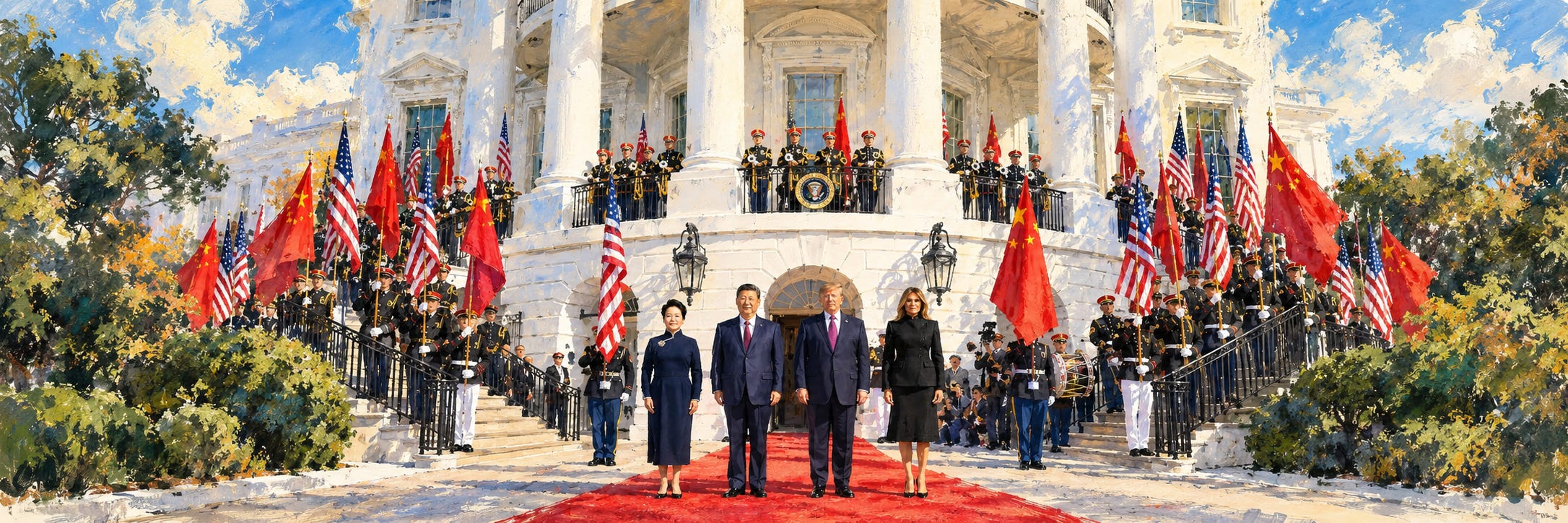
Gung-Ho Diplomacy: Chinese Commentary on the Trump-Xi Summit (30 September)
In official commentary, symbolism and language are the focus, even if difficult questions lurk beneath. CCTV’s Yuyuan Tantian blog approvingly quoted Trump’s invocation of “gung-ho” as a symbol of Sino-US cooperation. The term originated in a wartime mistranslation of China’s Industrial Cooperatives (工合, for short) as “work together”, and a similar linguistic elasticity appears in Yuyuan Tantian’s treatment of “respect, fairness and reciprocity” (the US addition to the new formula of a “constructive relationship of strategic stability”, which China has now also adopted). In Trump-administration terms, “fairness and reciprocity” usually refers to redressing unequal market access and global trade imbalances. The blog acknowledges this, but instead recasts the phrase in terms of sovereign equality, national status and China’s preferred principles of global governance. Read here

China’s Strategy for Promoting Non-Alignment in Southeast Asia | Xue Song (23 September)
Dr Xue Song argues that Sino-Indonesian relations under President Prabowo Subianto are becoming “more strategic and institutionalised”. Her evidence includes the inaugural Comprehensive Strategic Dialogue, the second foreign and defence ministers’ (2+2) meeting, a planned 2027-31 action plan and expanding defence cooperation, including through the Peace Garuda exercises. She contends that economic frictions such as nickel policy can be contained within this framework, and that Indonesia’s engagement may widen political space for other ASEAN states to pursue defence ties with China. The institutional intensity is real and is broadening the relationship beyond economics. However, it also reflects a practical need to manage divergence, and both dynamics are at work. Read here

What China Wants from the Washington Summit (18 September)
The framing of “constructive strategic stability” has remained consistent since our coverage of the consensus view in May. “Strategic stability” is presented by many scholars as a consequence of “strategic stalemate”, a term that the IR scholar Jin Canrong has previously explained as emerging from Mao’s On Protracted War. It refers to temporary stability achieved through mutual deterrence, and in this case is widely seen as having been attained as the outcome of improvements in China’s relative strength. The “constructive relationship” part is more aspirational and is how Chinese scholars often distinguish this paradigm from the nuclear-deterrent-based “strategic stability” between the US and the Soviet Union. Read here
What China Needs from an AI Deal with America | Huang Ping (13 September)
AI is expected to be a central issue at the Xi-Trump summit later this September, but the scope for concessions on either side seems much less certain. US rhetoric around AI safety is often viewed sceptically in China as a means of holding back homegrown companies, and given the recent exchange of barbs between the US and China over AI distillation, the scope for agreement over the terms of market competition appears even narrower. Huang Ping, a scholar at CUHK-Shenzhen, nevertheless lays out why it would be in China’s interests to seek a much broader AI agreement to secure its access to global markets and influence over standards. Read here

Who Pays for the New Economy? Economic Digest: August 2026 (8 September)
Overall expectations for the second half of 2026 are low among Chinese economists. This is partly a matter of policy—many would have preferred an unambiguous shift towards fiscal stimulus after the mid-year Politburo meeting, which instead focused on incremental policies and accelerating the transition to “new growth drivers”. Yet, as Wu Ge argues, the fundamental macroeconomic direction is dictated less by policy than structural factors. Mainly, these are the deepening deflationary effects of local-government deleveraging as formerly hidden debts from local-government financing vehicles (LGFVs) are moved onto government balance sheets through debt swaps. Read here

China’s Mandate to Rule the Waves and Secure the Future | Di Dongsheng (3 September)
There is something distinctly High Victorian about Di Dongsheng’s closing proclamation that “the descendants of the dragon shall ultimately rule the stars and the waves”. Indeed, the piece certainly strikes an extremely hawkish tone throughout, with Di proposing the establishment of a naval–merchant–financial complex to wrest maritime power from the “Anglo Saxons”. Yet Di is also picking up on a familiar thread in Chinese strategic thinking, made newly urgent by events around the Strait of Hormuz: the vulnerability and importance of maritime chokepoints. Read here
Changes Unseen, Strategies Uncharted | Digest: August 2026 (31 August)
This month’s digest pulls in different directions—insofar as we can follow a single thread, it is that of traditional systems being swept away and of “changes unseen in a century” coming to pass: in discussions of nuclear proliferation, the Cold War nuclear order has “irreversibly come to an end”; in the Middle East, the US security architecture is crumbling; in the maritime domain, volatility threatens sea lanes; and overseas, Chinese firms’ modus operandi is shifting. While most scholars identify the increasing security risks attendant on such changes, what comes next and what China should do about it are open questions. More hawkish scholars advocate stronger unilateral action in the international system, while others caution against such measures. Read here
N.B. Sinification features a broad spectrum of voices, ranging from conservative hawks and state propagandists to more moderate and liberal thinkers. Readers are encouraged to bear this diversity in mind when engaging with the content.


